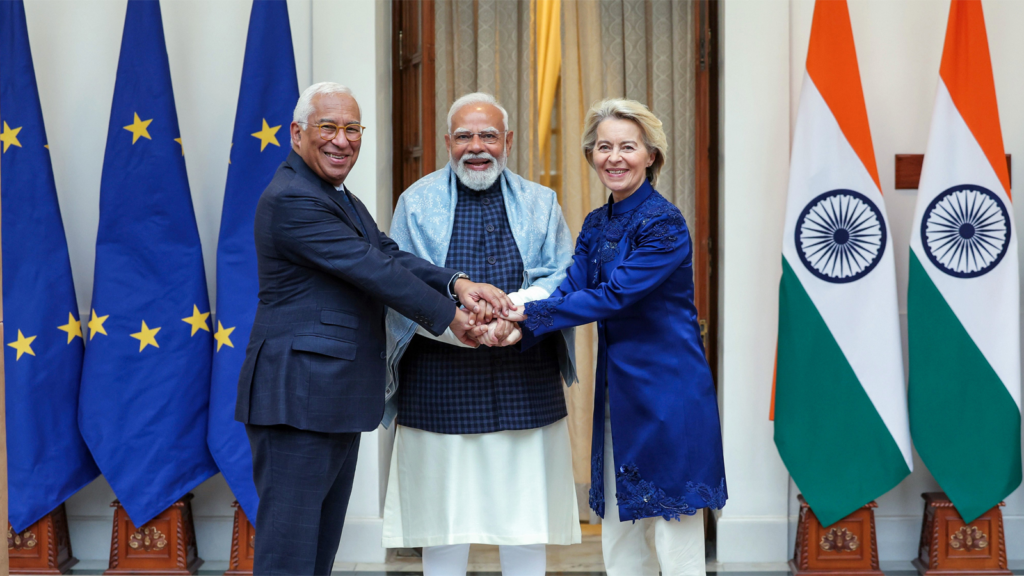
India–European Union Free Trade Agreement: The Mother of All Deals
When India and the European Union finally shake hands on a Free Trade Agreement (FTA), it won’t just be another trade pact added to a long list. It will be the deal — vast in scale, complex in ambition, and transformative in impact. That is why policymakers, economists, and businesses on both sides have begun calling it the “mother of all deals.” And honestly, the description fits.
The India–EU Free Trade Agreement is not merely about tariffs and trade balances. It is about shaping the future of two economic powerhouses in a rapidly changing global order.
Why the India–EU FTA Matters So Much
India and the European Union together represent nearly a quarter of the world’s population and around 20% of global GDP. The EU is already one of India’s largest trading partners, while India is among the fastest-growing major economies the EU wants deeper access to.
Yet, trade between the two remains far below its true potential.
An ambitious India–EU free trade agreement aims to change that by cutting tariffs, reducing regulatory friction, and opening doors for goods, services, investment, and talent. In a world marked by supply chain disruptions, geopolitical uncertainty, and economic nationalism, this deal signals something powerful: trust in open, rules-based trade.
What’s on the Table in This “Mega Deal”
Calling it the “mother of all deals” isn’t hyperbole. The scope of the India European Union trade deal is enormous.
1. Goods Trade at an Unprecedented Scale
The EU wants greater access to India’s vast consumer market for automobiles, wines, spirits, medical devices, and high-end manufacturing. India, on the other hand, seeks better entry for textiles, pharmaceuticals, engineering goods, chemicals, and agricultural products.
Reducing high tariffs — especially in sensitive sectors — is politically difficult, but the long-term gains could be massive.
2. Services and Skilled Professionals
For India, services are the crown jewel. IT, software, consulting, finance, and professional services are areas where India holds a clear competitive advantage. Easier movement of professionals, recognition of qualifications, and market access could be a game-changer.
For the EU, this means affordable, high-quality services. For India, it means jobs, exports, and global influence.
3. Investment and Technology Flows
European companies bring advanced technology, sustainable manufacturing practices, and long-term capital. India brings scale, growth, and a reform-oriented market. A strong investment framework under the FTA could unlock billions in two-way investment.
The Strategic Angle: More Than Just Trade
This deal is also deeply strategic.
The EU is looking to diversify away from overdependence on China, while India wants reliable partners who respect sovereignty and democratic values. The India–EU FTA fits perfectly into this realignment.
It strengthens supply chains, boosts economic resilience, and positions India as a credible manufacturing and innovation hub under initiatives like Make in India and Atmanirbhar Bharat — without turning inward.
In simple terms: this agreement is as much about geopolitics as it is about economics.
The Tough Conversations Nobody Can Avoid
If this deal is so good, why has it taken so long?
Because it’s hard.
The European Union is deeply focused on environmental standards, labor rights, carbon regulations, and sustainability. India worries that these could become disguised trade barriers that hurt small manufacturers and exporters.
Issues like the Carbon Border Adjustment Mechanism (CBAM), intellectual property rights, data protection, and public procurement are sensitive and complex. Both sides are being asked to compromise — not just economically, but philosophically.
Still, progress is happening. And the very fact that negotiations are moving forward signals mutual seriousness.
What It Means for Businesses and Consumers
For businesses, the India–EU free trade agreement could mean lower costs, wider markets, and greater certainty. Indian MSMEs could plug into European value chains. European firms could scale faster in India’s booming market.
For consumers, it means more choice, better quality, and competitive prices — from cars and electronics to clothing and healthcare products.
And for startups and innovators, it opens doors to collaboration across borders like never before.
Why This Deal Could Redefine India’s Global Role
India is no longer just a large market. It is a rule-shaper in the making.
By engaging deeply with the European Union — one of the world’s most sophisticated regulatory blocs — India signals its readiness to play at the highest level of global trade governance.
The India EU trade deal, if done right, could become a template for future agreements with other advanced economies.