India–US Tariff Breakthrough: A Game-Changer for Global Trade, Growth & Markets
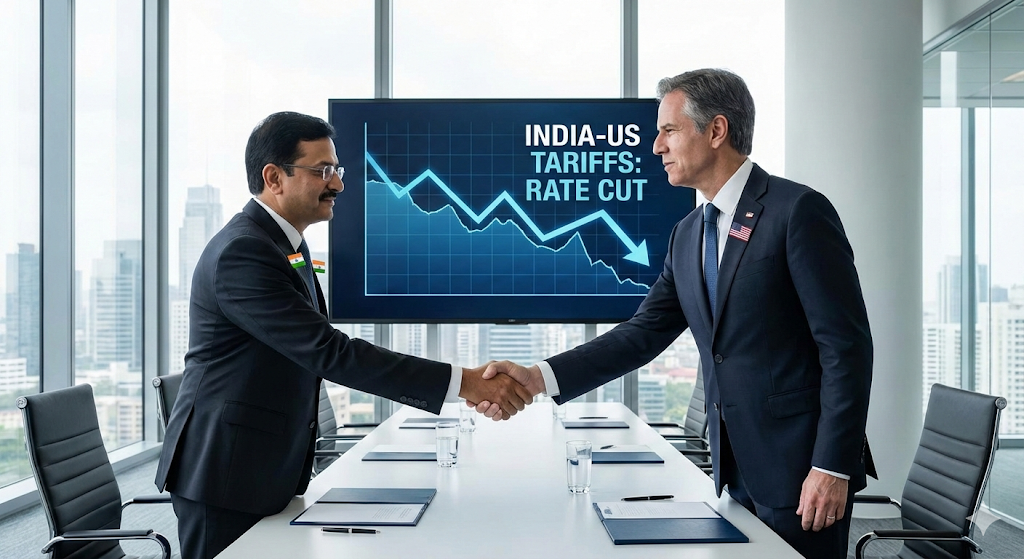
In a major economic and diplomatic breakthrough, the United States has agreed to cut tariffs on Indian goods to 18%, ushering in a new era of cooperation between two of the world’s largest democracies. The move, announced on February 2, 2026 by U.S. President Donald Trump following a phone call with Indian Prime Minister Narendra Modi, marks a dramatic reset in bilateral trade relations after a period of heightened tension and tariff escalation.
This decisive tariff cut — from an earlier punitive level that at times reached 50% — comes at a crucial inflection point for both economies. India, grappling with slowed export growth due to heavy duties, and the U.S., intent on rebalancing its trade deficit, have struck a deal that blends economic pragmatism with geopolitical strategy.
From Trade Tensions to Tactical Reset
The tariff conflict between the two nations had simmered since mid-2025, when Washington imposed steep reciprocal tariffs on Indian exports in response to New Delhi’s high import duties on American goods and its energy ties with Russia. These tariff impositions, in some cases doubling duties to near 50%, had weighed on Indian exporters and clouded market sentiment.
Over the past months, markets responded. Indian equity benchmarks and the rupee experienced volatility, and forward-looking investors began pricing in the risk of prolonged trade frictions. Export sectors — especially labour-intensive ones — voiced concern over shrinking price competitiveness in the U.S., historically India’s largest goods market.
However, the new agreement has effectively lifted that overhang. By dropping punitive tariffs and agreeing on an 18% reciprocal rate — significantly lower than the earlier 50% peak — both governments are signalling a renewed commitment to trade engagement.
What Changed: Unpacking the New Tariff Regime
Under the new U.S. tariff structure:
- The punitive tariff linked to Indian purchases of Russian crude oil has been withdrawn.
- The base “reciprocal” tariff has been reset to 18%, down sharply from the combined effective rates that had pushed duties up to around 50%.
- India, in return, has committed to phasing out tariffs on U.S. goods and boosting purchases of American energy, technology, farm products, and other goods worth an estimated $500 billion.
This calibrated diplomacy reflects both sides’ strategic interests: the U.S. strengthens its energy and technology exports, while India restores trade competitiveness and diversifies its energy procurement strategy.
Growth, Exports & Economic Sentiment: A Positive Upside
Economic experts are already weighing in on the macro benefits. Chief Economic Adviser V. Anantha Nageswaran noted that the tariff cut could materially improve India’s growth outlook, nudging GDP figures closer to or above official expectations. Lower trade barriers are expected to encourage exports, stabilise investor confidence, and attract foreign capital into equity and debt markets — a sentiment boost that could resonate across Asia’s third-largest economy.
The rupee, in particular, found relief after months of pressure. With trade uncertainty receding, currency markets priced in lower risk premiums, helping stabilise exchange rates and reducing the cost of external debt servicing for Indian corporations.
Analysts also see an export rebound on the horizon. Moody’s and other global research houses highlight that the reduced tariff burden will reinvigorate demand for goods like textiles, gems and jewellery, leather products, and other labour-intensive manufacturing — sectors that employ millions and contribute significantly to India’s export basket.
Winning Industries and Market Winners
From a market perspective, several sectors are poised to benefit:
- Textiles & Apparel: Lower duties improve U.S. competitiveness versus rivals like Bangladesh and Vietnam.
- Gems & Jewellery: With tariff barriers lower, lost market share can be recaptured.
- Agricultural Exports: Basmati rice and edible oils could see renewed demand, especially with broader distribution networks and tariff relief.
- Engineering & Chemicals: Competitive tariff rates unlock new export opportunities and support capacity utilisation.
The stock market responded with optimism, with export-oriented shares rallying on expectations of stronger order books and earnings outlook — a classic example of policy dovetailing with market sentiment.
Strategic and Diplomatic Dimensions
Beyond the economics, the tariff cut carries strategic weight. By reducing trade barriers, India and the U.S. are reinforcing their geopolitical partnership, particularly as global supply chains undergo realignment. The timing of the deal, amid broader efforts to stabilise global energy markets and navigate the complex Russia-Ukraine situation, demonstrates how trade policy intersects with broader foreign policy goals.
For India, the deal underscores a shift toward deeper integration with Western markets, while preserving its strategic autonomy. For the U.S., rejuvenating trade with India supports its ambitions to build resilient supply chains and diversify sources of goods and services.