Hyundai Motor India Q3 Net Profit Rises 6% YoY to ₹1,234 Crore on Festive Boost and GST Support
Hyundai Motor India delivered a steady performance in the third quarter, reporting a 6% year-on-year rise in net profit to ₹1,234 crore, supported by strong festive demand, favorable GST dynamics, and resilient consumer sentiment. The automaker also posted an 8% increase in revenue, underlining its ability to navigate a competitive auto market while maintaining profitability.
Festive Demand Drives Volumes
The December quarter traditionally benefits from India’s festive calendar, and Hyundai Motor India was no exception. Strong sales momentum during key festivals helped boost vehicle dispatches across segments, particularly in SUVs and premium hatchbacks, which continue to see robust consumer interest.
Industry observers note that improved showroom footfalls, attractive financing options, and targeted festive offers played a critical role in sustaining demand, even as inflation and interest rates remained key concerns for buyers.
GST Benefits Add to Profitability
A notable contributor to Hyundai’s improved bottom line was GST-related efficiencies, which helped ease cost pressures. Better input tax credit utilization and optimized supply-chain taxation provided incremental support to margins during the quarter.
These gains came at a time when automakers across India are focusing on cost discipline, inventory management, and pricing strategies to protect profitability amid fluctuating raw material prices.
Revenue Climbs 8% on Strong Sales Mix
Hyundai Motor India reported an 8% year-on-year growth in revenue, reflecting both higher sales volumes and an improved product mix. The company’s focus on higher-margin models, including compact SUVs and feature-rich variants, helped lift realizations.
In recent quarters, Hyundai has steadily strengthened its position in the SUV segment, which remains one of the fastest-growing categories in the Indian passenger vehicle market.
Margin Stability Despite Cost Pressures
While input costs such as steel and logistics remain volatile, Hyundai managed to maintain relative margin stability through operational efficiencies and selective price adjustments. Analysts say the company’s localized manufacturing base and strong supplier ecosystem continue to act as key buffers against external cost shocks.
Outlook: Cautiously Optimistic
Looking ahead, Hyundai Motor India remains cautiously optimistic about demand conditions. With rural sentiment gradually improving and urban demand holding steady, the company expects volume growth to remain healthy in the coming quarters.
However, challenges persist. Rising competition in the electric vehicle (EV) space, evolving emission norms, and potential fluctuations in commodity prices could weigh on margins. Hyundai’s upcoming product launches and its long-term EV strategy will be closely watched by investors and industry experts alike.
Key Highlights at a Glance
Q3 Net Profit: ₹1,234 crore (up 6% YoY)
Revenue Growth: Up 8% year-on-year
Growth Drivers: Festive demand, GST efficiencies, strong SUV sales
Outlook: Stable demand with focus on cost control and product innovation
Historic Silver Crash on 30 January 2026 Sends Shockwaves Through Indian Markets
In a dramatic turn of events that rattled precious metals markets across the country, silver prices in India experienced a massive crash on 30 January 2026, marking one of the steepest single-day declines in recent memory. What had been a year of extraordinary gains for the white metal suddenly reversed, leaving investors and traders stunned as prices plunged sharply from record highs just a day earlier.
The silver market’s collapse unfolded against a backdrop of intense volatility fueled by global economic shifts, speculative profit-taking, a strengthening US dollar, and adjustments in trading conditions that collectively triggered panic selling both in the domestic and international arenas.
Record Rally Followed by Sudden Collapse
Just days before the crash, silver had surged to unprecedented levels. On 29 January 2026, the price of silver on India’s Multi Commodity Exchange (MCX) soared past ₹4,00,000 per kilogram — an all-time high. This breakout reflected bullish momentum driven by robust industrial demand, lingering inflation concerns, and speculative interest.
However, the euphoria was short-lived. On 30 January, the market experienced a brutal correction. Silver prices plummeted more than 15 percent, falling to roughly ₹3,42,390 per kilogram (by mid-afternoon trading) from levels near ₹4,20,048 just the day prior — erasing upwards of ₹70,000 in value within hours.
According to market data, this selloff was one of the steepest in recent decades — with international spot prices falling by up to 37 percent in a single session and futures contracts tumbling over 30 percent, marking historic lows not seen since the early 1980s.
What Triggered the Crash?
Industry experts point to several key catalysts behind this sharp downturn:
Profit-Booking After Record Gains
After an impressive rally that took silver from under ₹2,50,000 per kilogram at the start of January to over ₹4,00,000 in just weeks, many investors opted to lock in gains. This wave of profit-booking accelerated selling pressure and intensified volatility in already sensitive markets.
Strengthening US Dollar and Global Signals
A strengthening US dollar played a significant role. Market sentiment globally shifted when investors reacted to macroeconomic cues, including policy signals from the United States that boosted confidence in the dollar. Since precious metals are priced in dollars, a stronger dollar typically weakens demand for metals like silver and gold, putting downward pressure on prices.
Margin Hikes and Technical Factors
The Chicago Mercantile Exchange (CME) raised margin requirements on silver futures — a move that forced leveraged traders to unwind positions quickly. This “forced selling” further accelerated the decline, especially in derivatives markets, where large contracts changed hands at rapidly falling prices.
Impact on Indian Markets and Investors
The fallout was profound in India:
Silver futures on MCX witnessed one of the steepest slides, erasing large portions of the gains made throughout January.
Domestic bullion markets reacted sharply, with local spot prices and city-wise dealer rates reflecting significant drops compared to the previous day.
The wider precious metals segment also felt pressure, as gold — traditionally seen as a safe haven — slipped alongside silver, though to a lesser extent.
The silver crash has become a defining moment for many investors, especially those who entered on speculative fervor during the rally. Numerous market participants expressed surprise at the velocity of the fall, highlighting that a nearly 40 percent drop in a single trading session is virtually unheard of in the Indian context.
Ripple Effects Beyond Commodity Markets
The crash’s implications extended beyond metal prices:
ETFs and Related Securities
Silver-linked Exchange Traded Funds (ETFs), which allow investors indirect exposure to the metal, saw extended volatility. Many of these funds tumbled sharply as underlying assets slumped, forcing broader revaluation of portfolios that held precious metal ETFs.
Mining and Metal Stocks
Equity markets also felt the impact. Shares of major metals and mining firms, especially those closely tied to silver production and related commodities, experienced selling pressure as investor confidence wavered.
Analyst Insights: Correction or New Trend?
Market strategists are divided on whether this sharp correction signals a longer-term trend or a temporary adjustment. Some analysts argue that the selloff represents a classic volatility phenomenon following an unsustainable rally — essentially a “healthy reset” that clears speculative excess. Others warn that the market has entered a new phase of uncertainty, where macroeconomic factors like currency strength and interest-rate expectations could continue to weigh on precious metals.
A seasoned commodities strategist noted that while silver’s fundamentals — including industrial demand from solar panel, electronics, and automotive sectors — remain intact, short-term price behavior is currently driven more by investor psychology than supply-demand imbalances.
What Traders and Investors Are Saying
Across social media and trading forums, sentiment was mixed but passionate. Many traders described the crash as a “wake-up call” about the risks of momentum chasing in highly leveraged markets. Some saw it as a buying opportunity amid fear-driven selling, while others cautioned that more downside might lie ahead if global conditions remain unstable.
Looking Ahead: What This Means for the Silver Market
As markets reopen this week, all eyes are on how silver prices will stabilize. Investors will be watching macroeconomic data, currency movements, and broader risk sentiment for clues about future direction. While some expect silver to regain composure as global economic signals clarify, others believe the crash may linger until clear bullish drivers re-emerge.
For now, the silver crash of 30 January 2026 will be remembered as a watershed event — a stark reminder of how rapidly market dynamics can change and how crucial disciplined risk management is in the world of commodities trading.
Union Budget 2026: India Charts a Bold Roadmap for Growth, Jobs and Inclusive Development
In a defining moment for India’s economic journey, Finance Minister Nirmala Sitharaman presented the Union Budget 2026–27 in the Lok Sabha today, unveiling a comprehensive fiscal blueprint aimed at strengthening growth, expanding infrastructure, driving innovation, and empowering citizens across all sections of society. With a focus on growth-oriented reforms, robust public investment, and equitable development, this year’s budget sets a clear roadmap to steer the nation’s economy toward new milestones amid a rapidly changing global environment.
Steady Growth Amid Fiscal Discipline
At the heart of the Union Budget 2026 is a commitment to sustainable economic expansion. The government has projected a nominal GDP growth of 10% for the fiscal year 2026–27, reinforcing India’s position as one of the fastest-growing major economies globally. The fiscal deficit has been prudently targeted at 4.3% of GDP, underlining the government’s emphasis on fiscal consolidation and economic stability.
A significant highlight is the enhanced capital expenditure — public capex — which has been raised to ₹12.2 lakh crore, marking nearly a 9% increase over the previous year. This upsurge in capital spending will strengthen infrastructure creation and catalyze long-term economic productivity.
Tax Reforms: Simplification and Citizen Relief
The Finance Minister maintained stability for taxpayers by keeping the income tax slabs mostly unchanged, which means the everyday taxpayer need not worry about higher tax rates this year. Crucially, the budget continued the rebate on income tax, providing a complete tax rebate for individuals earning up to ₹12.75 lakh annually, offering relief to the middle class and boosting disposable incomes.
In a bid to simplify the tax regime, the government signaled progress toward a more streamlined new Income Tax Act, set to become effective from 1 April 2026, which is expected to rationalize compliance norms and reduce litigation for taxpayers.
Infrastructure: Nation-Building Through Connectivity
One of the standout features of Union Budget 2026 is the massive push for multi-modal infrastructure and connectivity. The Finance Minister announced the development of seven high-speed rail corridors that will link major urban and economic centers such as Mumbai–Pune, Pune–Hyderabad, Hyderabad–Bengaluru, Delhi–Varanasi, and more. These corridors are designed to dramatically cut travel time, promote sustainable transport, and reinforce economic linkages between regions.
In addition to rail, the government highlighted plans for dedicated rare earth mineral corridors, aimed at leveraging India’s mineral wealth in states like Odisha, Kerala, Andhra Pradesh, and Tamil Nadu to support critical manufacturing sectors, including electric mobility and renewable energy.
Boost for Manufacturing, Technology and Strategic Sectors
Union Budget 2026 emphasizes building self-reliance through technology and manufacturing. A major announcement was the launch of India Semiconductor Mission 2.0 with a substantial allocation of ₹40,000 crore — reinforcing India’s ambition to become a global semiconductor manufacturing hub and resilient player in the global supply chain.
The Biopharma Shakti initiative, with an outlay of ₹10,000 crore over five years, aims to make India a global leader in biologics and biosimilars — expanding domestic capacities while reducing import dependence on critical medicines.
Further strategic measures include customs duty rationalization, incentives for green technologies, and a tax holiday until 2047 for foreign firms providing cloud services using Indian data centers — all structured to attract global investments and enhance technological capabilities.
Social Development: Health, Education and Women Empowerment
The Union Budget 2026 presented a socially inclusive vision by strengthening investment in health and education. The budget proposes training over 1 lakh allied health professionals, expanding emergency and trauma care facilities, and supporting five regional medical tourism hubs to grow India’s healthcare ecosystem.
Recognizing talented youth and innovation as drivers of tomorrow’s economy, the budget allocated funds for IIT Creator Labs, a new design institute, and increased focus on skill development to prepare India’s workforce for emerging opportunities.
Women’s economic participation received attention through support for women-led enterprises and SHE-Marts, community-owned retail outlets aimed at scaling rural women’s businesses and promoting local artisans.
Support for MSMEs and Entrepreneurship
The Union Budget 2026 reaffirmed support for micro, small and medium enterprises (MSMEs), a vital engine of job creation and economic inclusion. A proposed ₹10,000 crore SME Growth Fund and top-up to the Self-Reliant India Fund will provide critical financial backing for high-potential small businesses. Initiatives such as mandatory use of Trade Receivables Discounting System (TReDS) for Central Public Sector Enterprises aim to improve liquidity and ease credit access.
Dixon Technologies Q3 Results Declared: Profit Soars Amid Mixed Signals from Mobile Segment
Dixon Technologies (India) Ltd., one of India’s foremost electronics manufacturing services (EMS) companies, has once again grabbed headlines with its Q3 financial performance for the quarter ended December 31, 2025. The company announced its quarterly results on January 29, 2026, revealing a commendable jump in profitability and stable revenue growth, even as certain industry headwinds continue to impact specific segments of its business.
Strong Growth in Profit and Revenue: A Snapshot of Q3 FY26
Dixon Technologies delivered impressive financial numbers for Q3, demonstrating resilience and operational strength in a challenging macroeconomic environment. According to regulatory filings and financial disclosures, the company posted a healthy increase in its net profit, reporting a 48% year-on-year jump to ₹321 crore. This growth reflects sustained execution strength and cost control efforts across its key business verticals.
Revenue from operations for the quarter also showed a positive momentum, inching up to approximately ₹10,800 crore, registering around a 3% year-on-year rise compared with the corresponding period last year. While not eye-popping, this topline growth indicates stable demand across Dixon’s portfolio, especially considering the broader economic slowdowns in key sectors like consumer electronics and mobile phones.
Accompanying this revenue growth was a robust increase in EBITDA (earnings before interest, taxes, depreciation and amortisation), which expanded sharply by nearly 37% to ₹546 crore — a testament to healthy operational leverage and improved cost efficiency. Meanwhile, profit before tax also climbed strongly, rising around 44% year-on-year, underscoring effective financial management amid cost pressures.
Operational Highlights and Segment Performance
Dixon’s diversified structure — spanning EMS, mobile handset manufacturing, consumer electronics, home appliances, LED lighting, and more — continues to provide the company with strategic footholds across fast-growing technology segments. However, the performance within these segments varied significantly during the quarter:
Mobile and EMS Division: Growth with Challenges
The Mobile & EMS division remained the cornerstone of Dixon’s business. It contributed the bulk of the company’s revenue, helping sustain overall topline growth. For the December quarter, revenues from this division increased modestly, reflecting sustained but cautious demand.
Nevertheless, not all news was uniformly positive. The broader mobile phone market experienced a slowdown in the post-festival quarter, with global smartphone demand softening due to elevated memory prices and high inventory levels. As a result, some reports noted a notable decline in mobile revenue in certain pockets, with smartphone shipments falling and operating profitability weakening in discrete areas of operation.
Industry analysts pointed out that memory cost inflation and a modest reduction in production volumes dampened the pace of growth, particularly within price-sensitive mid and entry-level segments where demand elasticity is especially high. This dynamic introduces an interesting dual narrative: while Dixon’s overall results show strength, certain external pressures persist and will require strategic navigation in the quarters ahead.
Consumer Electronics and Appliances: Mixed Signals
Dixon’s consumer electronics portfolio — including segments like LED TVs and refrigerators — experienced mixed outcomes. Some sub-verticals reported slight declines in revenue, reflecting soft demand conditions in non-mobile categories. At the same time, home appliances and specialised verticals such as lighting products reported pockets of growth, highlighting how diversification is cushioning the company’s overall performance.
Nine-Month Performance: A Broader View
Looking beyond quarterly performance, Dixon’s results for the nine months ended December 31, 2025, paint a decidedly strong picture. The company’s cumulative revenue surged by around 36%, reaching nearly ₹39,000 crore compared with the same period last year. Profits also climbed significantly, with net profit up about 75% year-on-year over the nine-month period. This sustained multi-quarter growth underscores Dixon’s ability to scale its operations in a structurally expanding market.
Additionally, the company’s board approved employee stock options during the quarter, demonstrating confidence in its long-term growth prospects and reinforcing its commitment to talent retention and engagement.
Market Reaction and Strategic Outlook
Upon declaration of the results, Dixon’s stock registered modest gains, signalling a positive reception from investors. However, it is worth noting that the share price performance over recent months has seen volatility, influenced in part by broader market sentiment and external challenges like component price inflation and shifting demand patterns.
Management commentary during the earnings call stressed that despite short-term headwinds — particularly in mobile demand — the company remains confident about its long-term vision. Dixon’s leadership reiterated its ambition of achieving ₹1 lakh crore in revenues over time, driven by sustained focus on operational excellence, deeper market penetration, and expansion into adjacent technology segments.
ITC Ltd Reports 6% Rise in Net Profit to ₹5,088 Crore in December Quarter; Board Announces Interim Dividend
ITC Ltd, one of India’s most diversified conglomerates, has reported a robust performance for the third quarter (October–December) of the financial year 2025-26, with net profit rising around 6% to ₹5,088 crore compared to the same period last year, reinforcing confidence among investors and stakeholders alike. Alongside the strong earnings, the company’s board of directors declared an interim dividend, underscoring its commitment to rewarding shareholders.
In a quarter marked by fluctuating economic conditions and market headwinds, this uptick in profitability reflects steady demand across ITC’s key business verticals, including its flagship FMCG portfolio, cigarettes, and other emerging consumer categories. The interim dividend announcement adds to the positive sentiment, offering both long-term investors and market watchers a tangible sign of the company’s financial health and future prospects.
Profit Growth Amid Diverse Business Lines
ITC’s performance in the December quarter demonstrates resilience and strategic balance. The reported ₹5,088 crore net profit represents a year-on-year increase of nearly 6%, highlighting the company’s ability to deliver consistent shareholder value even as certain segments navigate challenging macroeconomic and input cost pressures.
Industry experts note that such earnings growth, particularly for a multinational conglomerate with interests spanning tobacco, FMCG, hospitality, paperboards, and agri-business, signals operational agility and adept portfolio management. Though some segments faced headwinds due to inflation in raw material costs, demand for consumer goods and premium products helped offset pressures on margins.
Interim Dividend Declared: A Boost for Investors
In its board meeting, ITC Ltd also declared an interim dividend for the quarter, further solidifying its shareholder-friendly payout policy. While the exact dividend per share was not disclosed in the initial disclosure, this move echoes the company’s long history of rewarding investors regularly and reflects confidence in sustained cash flows and long-term earnings potential.
Dividend declarations are an important signal in corporate India, especially for blue-chip companies like ITC, where consistent payouts can bolster investor trust and market valuations. Analysts believe that a sustained dividend track record combined with profit growth helps enhance total shareholder returns, particularly in cyclical or inflation-impacted markets.
Segment Performance and Strategic Highlights
Although the detailed segmental performance for this quarter is yet to be fully published, anecdotal insights from market participants suggest a mixed yet generally encouraging picture across ITC’s business lines:
FMCG and Cigarettes: The traditional bedrock of ITC’s revenue mix, cigarette sales, and non-smokeable FMCG products have reportedly continued to witness steady demand, underpinning topline growth.
Agri and Paperboards: Despite industry-wide raw material inflation, segments like agri produce and paperboards have shown resilience, benefiting from operational cost optimisation and selective price adjustments where feasible.
Emerging Consumers: Newer categories such as personal care, health foods, and convenience foods have continued to gain traction, contributing incremental volume growth and expanding ITC’s presence in the fast-moving consumer goods ecosystem.
These diversified revenue streams cushion the company against volatility in any single segment and support its long-term growth strategy.
Market Reaction and Outlook
Following the earnings announcement, ITC’s share performance is expected to reflect investor confidence in the company’s continued recovery and earnings momentum. Market analysts have highlighted that while input cost pressures remain a concern, ITC’s balanced portfolio and strong brand equity position it well for sustainable profitability.
Strategic initiatives, such as expansion in high-growth consumer categories and selective pricing strategies, are seen as key drivers for future quarters. Additionally, the company’s ongoing focus on operational efficiencies and cost discipline is likely to support margins over time.
Macro Perspective: Corporate India and Earnings Season
ITC’s results come amid a broader context of quarterly earnings across the Indian corporate landscape, where many companies have reported mixed performances reflecting global economic uncertainties and domestic demand patterns. Against this backdrop, ITC’s 6% profit growth is being viewed as a positive signal for investors looking for stability in India’s large-cap universe.
India–European Union Free Trade Agreement: The Mother of All Deals
When India and the European Union finally shake hands on a Free Trade Agreement (FTA), it won’t just be another trade pact added to a long list. It will be the deal — vast in scale, complex in ambition, and transformative in impact. That is why policymakers, economists, and businesses on both sides have begun calling it the “mother of all deals.” And honestly, the description fits.
The India–EU Free Trade Agreement is not merely about tariffs and trade balances. It is about shaping the future of two economic powerhouses in a rapidly changing global order.
Why the India–EU FTA Matters So Much
India and the European Union together represent nearly a quarter of the world’s population and around 20% of global GDP. The EU is already one of India’s largest trading partners, while India is among the fastest-growing major economies the EU wants deeper access to.
Yet, trade between the two remains far below its true potential.
An ambitious India–EU free trade agreement aims to change that by cutting tariffs, reducing regulatory friction, and opening doors for goods, services, investment, and talent. In a world marked by supply chain disruptions, geopolitical uncertainty, and economic nationalism, this deal signals something powerful: trust in open, rules-based trade.
What’s on the Table in This “Mega Deal”
Calling it the “mother of all deals” isn’t hyperbole. The scope of the India European Union trade deal is enormous.
1. Goods Trade at an Unprecedented Scale The EU wants greater access to India’s vast consumer market for automobiles, wines, spirits, medical devices, and high-end manufacturing. India, on the other hand, seeks better entry for textiles, pharmaceuticals, engineering goods, chemicals, and agricultural products.
Reducing high tariffs — especially in sensitive sectors — is politically difficult, but the long-term gains could be massive.
2. Services and Skilled Professionals For India, services are the crown jewel. IT, software, consulting, finance, and professional services are areas where India holds a clear competitive advantage. Easier movement of professionals, recognition of qualifications, and market access could be a game-changer.
For the EU, this means affordable, high-quality services. For India, it means jobs, exports, and global influence.
3. Investment and Technology Flows European companies bring advanced technology, sustainable manufacturing practices, and long-term capital. India brings scale, growth, and a reform-oriented market. A strong investment framework under the FTA could unlock billions in two-way investment.
The Strategic Angle: More Than Just Trade
This deal is also deeply strategic.
The EU is looking to diversify away from overdependence on China, while India wants reliable partners who respect sovereignty and democratic values. The India–EU FTA fits perfectly into this realignment.
It strengthens supply chains, boosts economic resilience, and positions India as a credible manufacturing and innovation hub under initiatives like Make in India and Atmanirbhar Bharat — without turning inward.
In simple terms: this agreement is as much about geopolitics as it is about economics.
The Tough Conversations Nobody Can Avoid
If this deal is so good, why has it taken so long?
Because it’s hard.
The European Union is deeply focused on environmental standards, labor rights, carbon regulations, and sustainability. India worries that these could become disguised trade barriers that hurt small manufacturers and exporters.
Issues like the Carbon Border Adjustment Mechanism (CBAM), intellectual property rights, data protection, and public procurement are sensitive and complex. Both sides are being asked to compromise — not just economically, but philosophically.
Still, progress is happening. And the very fact that negotiations are moving forward signals mutual seriousness.
What It Means for Businesses and Consumers
For businesses, the India–EU free trade agreement could mean lower costs, wider markets, and greater certainty. Indian MSMEs could plug into European value chains. European firms could scale faster in India’s booming market.
For consumers, it means more choice, better quality, and competitive prices — from cars and electronics to clothing and healthcare products.
And for startups and innovators, it opens doors to collaboration across borders like never before.
Why This Deal Could Redefine India’s Global Role
India is no longer just a large market. It is a rule-shaper in the making.
By engaging deeply with the European Union — one of the world’s most sophisticated regulatory blocs — India signals its readiness to play at the highest level of global trade governance.
The India EU trade deal, if done right, could become a template for future agreements with other advanced economies.
LIC Demerger: What It Means for India’s Largest Insurer and Its Stakeholders
The Life Insurance Corporation of India (LIC) is more than just an insurance company—it is a household name, a symbol of trust, and a financial backbone for millions of Indians. Since its listing on the stock market, LIC has been under constant public and investor scrutiny. One topic that has increasingly gained attention is the possibility of an LIC demerger. While demergers are common in the corporate world, the idea of LIC restructuring its vast operations has sparked curiosity, debate, and optimism.
This article explores what an LIC demerger could mean, why it matters, and how it may shape the future of India’s insurance and financial landscape.
Understanding the Concept of a Demerger
A demerger refers to the separation of a company into two or more independent entities. Each entity operates with its own management, financials, and strategic goals. Companies usually opt for demergers to unlock value, improve efficiency, and allow sharper business focus.
In LIC’s case, a demerger would likely involve splitting its insurance operations from its investment or non-core businesses, or creating separate verticals for life insurance, pensions, asset management, or health insurance.
Why Is LIC Demerger Being Discussed?
LIC is unlike any other insurer in India. It manages enormous assets, has a dominant market share, and plays multiple roles—from insurance provider to major institutional investor. This complexity, while powerful, also makes LIC difficult to evaluate and manage efficiently.
Some of the key reasons why an LIC demerger is being discussed include:
1. Unlocking Shareholder Value
Investors often find it challenging to correctly value LIC because its insurance business and investment activities are deeply intertwined. A demerger could help unlock hidden value by allowing each business unit to be valued independently.
2. Better Operational Focus
Different business segments require different strategies. A separated structure could allow LIC’s core insurance business to focus purely on customer growth, innovation, and service quality, while investment arms focus on returns and capital allocation.
3. Increased Transparency
A demerged structure would improve financial transparency. Clear reporting for each entity would benefit investors, regulators, and policyholders alike.
4. Alignment with Global Practices
Globally, large insurers operate through multiple specialized subsidiaries. A potential LIC demerger could align India’s largest insurer with international best practices.
Possible Structure of an LIC Demerger
While no official roadmap has been announced, analysts speculate that an LIC demerger could take several forms:
Separation of life insurance and pension businesses
Spinning off asset management or investment subsidiaries
Creating a standalone health insurance arm
Listing individual subsidiaries independently
Such a structure would allow each unit to grow independently while still benefiting from the LIC brand.
Impact of LIC Demerger on Policyholders
One of the biggest concerns surrounding an LIC demerger is its impact on policyholders. The good news is that policyholder interests are usually protected during such restructuring.
Premiums, policy benefits, maturity amounts, and claim processes would remain unchanged. In fact, a more focused insurance entity could improve customer service, faster claim settlements, and better product innovation.
For policyholders, a demerger is less about disruption and more about long-term stability and efficiency.
What It Means for Investors
From an investor’s perspective, an LIC demerger could be a game-changer. Separate listed entities often lead to better price discovery and improved market performance.
Investors may benefit from:
Clearer financial metrics
Higher return on equity for focused businesses
Potential listing gains from newly created entities
Better dividend visibility
Historically, well-executed demergers in India have generated significant shareholder wealth, and LIC could follow a similar path if managed carefully.
Challenges and Concerns
Despite the potential benefits, an LIC demerger is not without challenges.
Scale and complexity: LIC’s size makes restructuring a massive operational task.
Regulatory approvals: Multiple regulators would need to be involved.
Government stake: LIC is government-backed, making strategic decisions politically sensitive.
Execution risk: Poor implementation could lead to confusion and inefficiencies.
These challenges explain why any LIC demerger would be gradual and carefully planned rather than sudden.
Historic Silver Surge: Price in India Crosses ₹3,00,000 per Kg — What This Means for Investors and Consumers
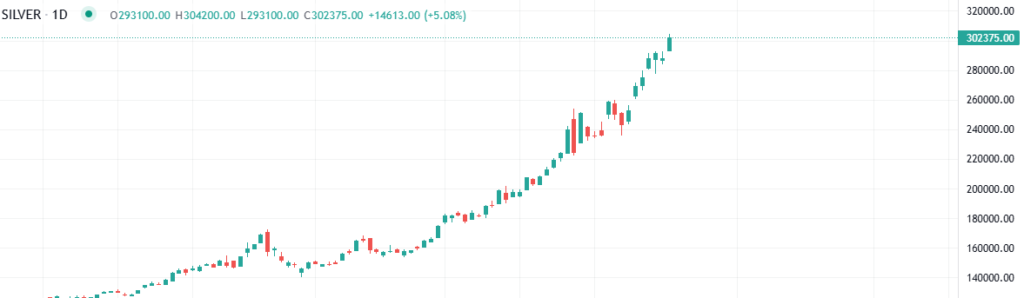
In a remarkable turn of events, silver prices in India have surged past the ₹3,00,000 per kilogram mark, a level that was once considered distant even by seasoned market watchers. This historic milestone underscores the intense momentum in the precious metals market and reflects a blend of global economic dynamics, investor sentiment, and shifting demand patterns.
Silver Breaks New Ground — What’s Happening?
On January 19, 2026, the price of silver in major Indian markets crossed the ₹3 lakh per kilogram threshold for the first time. Data from commodity exchanges and bullion markets revealed that silver futures rocketed due to strong global cues and heightened buying activity.
This historic price point isn’t just another number on the chart — it symbolizes a significant sea change in how precious metals are being priced and perceived in India. Investors, traders, jewellers, and retail buyers alike are taking notice, realizing that silver has become much more than a tradable commodity — it’s now a compelling investment asset class.
Why Is Silver So Expensive Now? A Confluence of Factors
1. Global Market Dynamics and Safe-Haven Demand
With economic uncertainties lingering globally, precious metals like silver and gold have traditionally acted as safe havens. Recent geopolitical tensions and tightening financial conditions have pushed investors toward tangible assets — spurring demand and driving up silver prices.
Silver’s rising appeal isn’t confined to India. Across global markets, prices for the white metal have seen significant lifts, pushing benchmarks higher and boosting domestic rates. Analysts note that this surge is partly fueled by investors looking to protect wealth amid market volatility.
2. Industrial Demand Bolsters Prices
Unlike gold, which is largely driven by retail and investment demand, silver’s value is influenced by both investment interest and industrial usage — especially in sectors like electronics, photovoltaics (solar panels), and electric vehicle components. As these industries expand, so does the demand for silver — tightening the supply-demand balance and contributing to higher prices.
With the global shift toward green energy and technological advancements, silver has become a crucial raw material — making its price action particularly sensitive to industrial growth prospects.
3. Currency Movements & Domestic Market Trends
The Indian rupee’s movement against the US dollar also plays a role. A weaker rupee generally makes imported commodities, including silver, costlier — amplifying domestic price rallies. Furthermore, bullion market dynamics, futures trading on platforms like Multi Commodity Exchange (MCX), and speculative positioning have intensified price swings.
What ₹3,00,000/kg Means for Investors and Buyers
For Investors
This new price level is a potential watershed moment. Silver’s rise has outpaced many other assets over the past year, attracting more attention from retail and institutional investors. Historically, commodities like silver benefit during periods of inflation and financial uncertainty because they maintain intrinsic value.
However, such sharp rallies can also invite volatility. Market experts caution that while silver’s rally could persist, investors should stay informed and adopt risk-aware strategies.
For Consumers and Jewellery Markets
For everyday buyers — especially those purchasing silver jewellery or artefacts — the price surge has direct implications. Many households that traditionally purchase silver for weddings, festivals, or gifting might feel a pinch as the cost per kilogram steadily climbs.
Jewellers, too, are adjusting prices in sync with market rates, which affects both retail premiums and making charges. Buyers planning purchases in the near term need to monitor prices closely and consider timing their buys wisely.
Historic Price Context: Silver’s Long Journey
Silver hasn’t always commanded such elevated prices in India. In fact, over the past two decades, the metal has experienced dramatic appreciation — rising from relatively modest levels in the early 2000s to today’s record highs.
This multi-decade ascent highlights not just cyclical shifts but long-term demand growth, structural changes in global trade, and evolving investor preferences. Today’s price benchmark is a testament to how precious metals remain deeply woven into both financial markets and cultural practices in India.
What Analysts Are Saying About Future Trends
While currents are bullish now, analysts are watching a host of indicators that could influence silver’s trajectory in 2026 and beyond:
Geopolitical stress and safe-haven demand could keep precious metals attractive.
Industrial consumption growth — particularly in clean energy and tech-driven sectors — may continue to underpin silver’s fundamental value.
Global economic indicators such as interest rates, inflation data, and currency movements will remain key drivers.
Some forecasts even suggest further gains could be on the horizon, potentially taking prices beyond current record highs as the year progresses.
Q3 FY26 Consolidated Total Income at Rs. 901 crore, up 101% YoY
Pre-Provisioning Operating Profit grew 7% YoY to Rs. 354 crore.
Share of Associates and JVs stood at Rs. 36 crore, vs. Rs. 59 crore in Q3 FY25.
Profit After Tax at Rs. 269 crore.
key operational highlights
● Share of Net Income from Business^ to Consolidated Total Net Income* grew to 55% in Q3 FY26, from 20% in Q3 FY25. ● NBFC’s Assets Under Management (AUM) at Rs.19,049 crore, up 4.5x YoY and 29% QoQ. ● AMC’s AUM at Rs. 14,972 crore across 10 funds; 1 million retail investor base. ● Payment Solutions’ Transaction Processing Volume at Rs. 16,315 crore, up 2.6x YoY. ● Payments Bank’s Deposits at Rs. 507 crore, up 94% YoY.
The Jio financial services limited business portfolio
Jio credit limited
● Gross Disbursements of Rs. 8,615 crore, ~2x YoY and 30% sequentially. ● Net Interest Income of Rs. 165 crore for the quarter, up 166% YoY and 18% QoQ.reflecting healthy growth in interest-earning assets and declining cost of funds. ● Pre-Provisioning Operating Profit increased to Rs. 99 crore, up 130% YoY and 24%QoQ.
Jio payments bank
● Total income grew 10x YoY and doubled sequentially to Rs. 61 crore, driven by a 3xsequential growth in transaction throughput. ● Total deposits, including current accounts, savings accounts, and wallets, stood at Rs. 507 crores as of December 31, 2025, up 94% YoY and 20% QoQ over the preceding quarter. ● Customer base grew 69% YoY and around 9% QoQ to 3.20 million. ● Business Correspondent network grew to 2,86,766 BCs vs. 7,263 BCs in Q3 FY25.
Jio payments solutions
● Transaction Processing Volume (TPV) at Rs. 16,315 crore, up 2.6x YoY and 20% QoQ. ● Gross fee and commission income at Rs. 96 crore, up 4.6x YoY and 26% QoQ. ● Sharp focus on unit-level profitability with consistent gross margin of 10 bps.
Jio Insurance broking
● Facilitated premium of Rs. 212 crore in Q3 FY26, up 23% YoY. ● Digital Point of Sales Person (PoSP) channel premium up ~5x QoQ
Jio Blackrock Jvs
● 51% of investors with Active SIPs; 40%+ of Retail AUM coming from B30 cities; 18%+ of our investors new to Mutual Funds. ● AUM in Active Equity Flexi Cap Fund up 70% since NFO. ● Curated model portfolios of JioBlackRock mutual funds launched to enable customersto achieve diverse financial goals
A Case for Rethinking SEBI’s New Merchant Banking Rules
India’s capital markets have witnessed a steady evolution over the past decade, shaped by regulatory tightening, technological advancement, and a growing base of retail investors. At the center of this ecosystem lies the merchant banking industry—an essential intermediary between companies seeking capital and investors looking for opportunities. Recently, the Securities and Exchange Board of India (SEBI) introduced a new set of merchant banking rules aimed at strengthening oversight, improving accountability, and reducing conflicts of interest.
While the intent behind SEBI’s revised merchant banking regulations is commendable, the new framework has sparked concern among industry participants. Market experts argue that some provisions may unintentionally raise entry barriers, restrict competition, and slow down capital formation, particularly for small and mid-sized enterprises. As the industry begins to assess the real-world implications, a growing consensus is emerging: SEBI’s new merchant banking rules may need rethinking.
Understanding SEBI’s New Merchant Banking Regulations
SEBI’s revised rules focus on enhancing the professionalism and financial strength of merchant bankers. Key changes include stricter net worth requirements, tighter compliance obligations, and greater responsibility placed on lead managers for disclosures and due diligence. The regulator’s objective is clear—reduce malpractices, ensure higher-quality public offerings, and protect investors from misleading information.
In recent years, several IPOs have come under scrutiny for aggressive pricing, weak fundamentals, and post-listing underperformance. SEBI’s response is rooted in preventing a repeat of such episodes by holding merchant bankers more accountable. However, critics argue that regulation designed primarily around worst-case scenarios risks overcorrecting the system.
Higher Entry Barriers and Industry Consolidation
One of the most debated aspects of SEBI’s new merchant banking rules is the increase in minimum net worth requirements. While large investment banks and well-capitalized firms can easily comply, smaller merchant bankers may struggle to meet the revised thresholds.
This could lead to rapid consolidation in the industry, where only a handful of large players dominate the merchant banking space. Reduced competition may ultimately hurt issuers, especially startups and small businesses that rely on niche or regional merchant bankers for fundraising support.
Industry insiders warn that fewer merchant bankers could mean higher fees, limited advisory options, and less innovation in deal structuring. For a developing economy like India, where access to capital remains uneven, such outcomes could be counterproductive.
Impact on SME IPOs and Capital Formation
India has made significant progress in encouraging SME listings through dedicated platforms such as BSE SME and NSE Emerge. Merchant bankers play a crucial role in guiding these companies through compliance, valuation, and investor outreach.
However, the new regulatory burden may discourage merchant bankers from taking on SME IPOs, which are already considered high-risk and low-margin. Increased compliance costs and greater liability could make such deals commercially unattractive.
If fewer merchant bankers are willing to sponsor SME listings, it could slow down capital formation at the grassroots level. This would directly affect job creation, entrepreneurship, and innovation—areas the government and regulators have consistently sought to promote.
Compliance Burden Versus Practical Realities
Another concern surrounding SEBI’s new merchant banking rules is the expanding scope of due diligence responsibilities. While investor protection is non-negotiable, merchant bankers argue that they cannot realistically verify every operational or business risk associated with an issuer.
In many cases, merchant bankers rely on audited financial statements, legal opinions, and disclosures provided by the company and its advisors. Expecting them to act as de facto guarantors of business performance may expose them to disproportionate legal and regulatory risk.
This heightened liability could encourage overly conservative behavior, where merchant bankers avoid innovative or unconventional businesses altogether. In the long run, such risk aversion may stifle market diversity and delay the entry of emerging sectors into public markets.
Investor Protection Needs a Balanced Approach
There is no doubt that investor protection lies at the heart of SEBI’s mandate. However, regulation works best when it balances accountability with market efficiency. Overregulation can sometimes shift risk rather than eliminate it.
Market analysts point out that investors also have a responsibility to assess risks, especially in equity markets. Transparent disclosures, strong enforcement against fraud, and financial literacy initiatives may offer more sustainable protection than placing excessive responsibility on intermediaries.
A more nuanced approach—where merchant bankers are held accountable for process integrity rather than business outcomes—could achieve SEBI’s goals without discouraging participation.
Global Comparisons and Competitive Positioning
India aspires to be a global financial hub, competing with markets such as Singapore, Hong Kong, and Dubai. Regulatory predictability and ease of doing business play a critical role in attracting global capital and intermediaries.
If India’s merchant banking regulations are perceived as overly restrictive or punitive, international firms may hesitate to expand their presence. Domestic talent, too, may gravitate toward less regulated jurisdictions.
Experts suggest that SEBI should benchmark its merchant banking rules against global best practices, ensuring that Indian regulations remain robust yet competitive.
The Need for Industry Consultation and Phased Implementation
A recurring demand from stakeholders is deeper industry consultation. Merchant bankers argue that while SEBI engaged with market participants, more granular feedback could have helped identify practical challenges.
Phased implementation of the new rules, especially those related to net worth and liability exposure, could allow firms time to adapt without disrupting ongoing deals. Transitional arrangements may prevent sudden exits from the market and maintain continuity.
Regulation, after all, is most effective when it evolves through dialogue rather than decree.
Rethinking Without Rolling Back
Calling for a rethink does not imply rolling back SEBI’s new merchant banking rules entirely. Instead, it suggests fine-tuning them to better align regulatory intent with market realities.
Selective relaxation for SME-focused merchant bankers, clearer definitions of liability, and proportional penalties could preserve investor protection while supporting growth. Regular reviews based on market data and outcomes would further strengthen the framework.
Conclusion
SEBI’s new merchant banking rules represent a decisive step toward strengthening India’s capital markets. Yet, as the initial impact becomes clearer, legitimate concerns have emerged about higher entry barriers, reduced competition, and unintended consequences for capital formation.
A thoughtful reassessment—grounded in data, dialogue, and global best practices—can help strike the right balance. By rethinking certain provisions without compromising on transparency and accountability, SEBI has the opportunity to reinforce trust while ensuring that India’s merchant banking ecosystem remains dynamic, inclusive, and growth-oriented.
In a rapidly evolving financial landscape, smart regulation is not about being the strictest—but about being the most effective.