WATCH SILVER RATES ON MONEY CONTROL
Historic Silver Surge: Price in India Crosses ₹3,00,000 per Kg — What This Means for Investors and Consumers
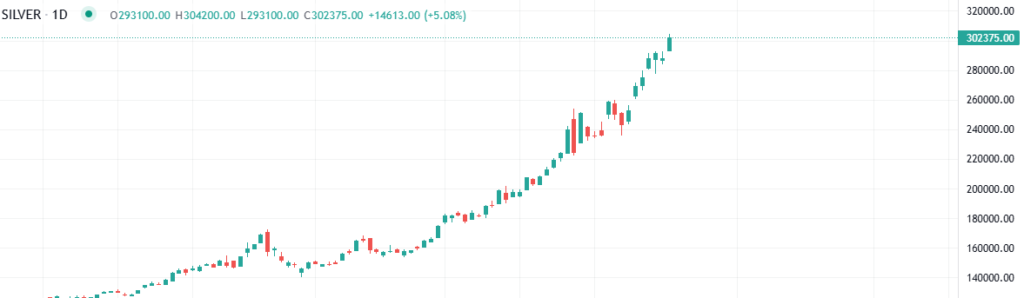
In a remarkable turn of events, silver prices in India have surged past the ₹3,00,000 per kilogram mark, a level that was once considered distant even by seasoned market watchers. This historic milestone underscores the intense momentum in the precious metals market and reflects a blend of global economic dynamics, investor sentiment, and shifting demand patterns.
Silver Breaks New Ground — What’s Happening?
On January 19, 2026, the price of silver in major Indian markets crossed the ₹3 lakh per kilogram threshold for the first time. Data from commodity exchanges and bullion markets revealed that silver futures rocketed due to strong global cues and heightened buying activity.
This historic price point isn’t just another number on the chart — it symbolizes a significant sea change in how precious metals are being priced and perceived in India. Investors, traders, jewellers, and retail buyers alike are taking notice, realizing that silver has become much more than a tradable commodity — it’s now a compelling investment asset class.
Why Is Silver So Expensive Now? A Confluence of Factors
1. Global Market Dynamics and Safe-Haven Demand
With economic uncertainties lingering globally, precious metals like silver and gold have traditionally acted as safe havens. Recent geopolitical tensions and tightening financial conditions have pushed investors toward tangible assets — spurring demand and driving up silver prices.
Silver’s rising appeal isn’t confined to India. Across global markets, prices for the white metal have seen significant lifts, pushing benchmarks higher and boosting domestic rates. Analysts note that this surge is partly fueled by investors looking to protect wealth amid market volatility.
2. Industrial Demand Bolsters Prices
Unlike gold, which is largely driven by retail and investment demand, silver’s value is influenced by both investment interest and industrial usage — especially in sectors like electronics, photovoltaics (solar panels), and electric vehicle components. As these industries expand, so does the demand for silver — tightening the supply-demand balance and contributing to higher prices.
With the global shift toward green energy and technological advancements, silver has become a crucial raw material — making its price action particularly sensitive to industrial growth prospects.
3. Currency Movements & Domestic Market Trends
The Indian rupee’s movement against the US dollar also plays a role. A weaker rupee generally makes imported commodities, including silver, costlier — amplifying domestic price rallies. Furthermore, bullion market dynamics, futures trading on platforms like Multi Commodity Exchange (MCX), and speculative positioning have intensified price swings.
What ₹3,00,000/kg Means for Investors and Buyers
For Investors
This new price level is a potential watershed moment. Silver’s rise has outpaced many other assets over the past year, attracting more attention from retail and institutional investors. Historically, commodities like silver benefit during periods of inflation and financial uncertainty because they maintain intrinsic value.
However, such sharp rallies can also invite volatility. Market experts caution that while silver’s rally could persist, investors should stay informed and adopt risk-aware strategies.
For Consumers and Jewellery Markets
For everyday buyers — especially those purchasing silver jewellery or artefacts — the price surge has direct implications. Many households that traditionally purchase silver for weddings, festivals, or gifting might feel a pinch as the cost per kilogram steadily climbs.
Jewellers, too, are adjusting prices in sync with market rates, which affects both retail premiums and making charges. Buyers planning purchases in the near term need to monitor prices closely and consider timing their buys wisely.
Historic Price Context: Silver’s Long Journey
Silver hasn’t always commanded such elevated prices in India. In fact, over the past two decades, the metal has experienced dramatic appreciation — rising from relatively modest levels in the early 2000s to today’s record highs.
This multi-decade ascent highlights not just cyclical shifts but long-term demand growth, structural changes in global trade, and evolving investor preferences. Today’s price benchmark is a testament to how precious metals remain deeply woven into both financial markets and cultural practices in India.
What Analysts Are Saying About Future Trends
While currents are bullish now, analysts are watching a host of indicators that could influence silver’s trajectory in 2026 and beyond:
- Geopolitical stress and safe-haven demand could keep precious metals attractive.
- Industrial consumption growth — particularly in clean energy and tech-driven sectors — may continue to underpin silver’s fundamental value.
- Global economic indicators such as interest rates, inflation data, and currency movements will remain key drivers.
Some forecasts even suggest further gains could be on the horizon, potentially taking prices beyond current record highs as the year progresses.