Silver Price Today Breaks ₹3 Lakh Per Kg in India, Shocks Buyers and Investors

WATCH SILVER RATES ON MONEY CONTROL

Historic Silver Surge: Price in India Crosses ₹3,00,000 per Kg — What This Means for Investors and Consumers

In a remarkable turn of events, silver prices in India have surged past the ₹3,00,000 per kilogram mark, a level that was once considered distant even by seasoned market watchers. This historic milestone underscores the intense momentum in the precious metals market and reflects a blend of global economic dynamics, investor sentiment, and shifting demand patterns.

Silver Breaks New Ground — What’s Happening?

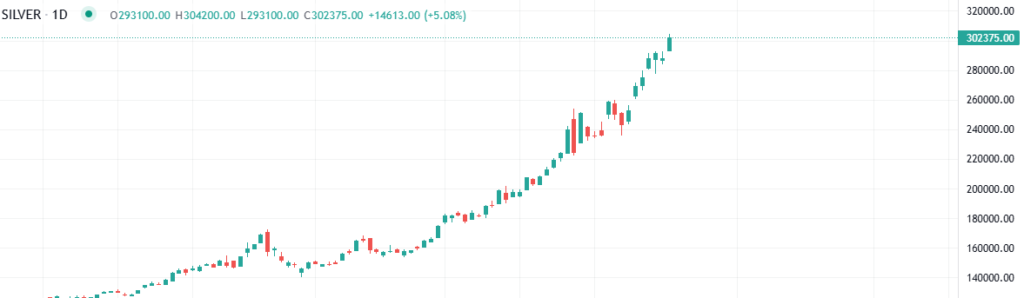
On January 19, 2026, the price of silver in major Indian markets crossed the ₹3 lakh per kilogram threshold for the first time. Data from commodity exchanges and bullion markets revealed that silver futures rocketed due to strong global cues and heightened buying activity.

This historic price point isn’t just another number on the chart — it symbolizes a significant sea change in how precious metals are being priced and perceived in India. Investors, traders, jewellers, and retail buyers alike are taking notice, realizing that silver has become much more than a tradable commodity — it’s now a compelling investment asset class.

Why Is Silver So Expensive Now? A Confluence of Factors

1. Global Market Dynamics and Safe-Haven Demand

With economic uncertainties lingering globally, precious metals like silver and gold have traditionally acted as safe havens. Recent geopolitical tensions and tightening financial conditions have pushed investors toward tangible assets — spurring demand and driving up silver prices.

Silver’s rising appeal isn’t confined to India. Across global markets, prices for the white metal have seen significant lifts, pushing benchmarks higher and boosting domestic rates. Analysts note that this surge is partly fueled by investors looking to protect wealth amid market volatility.

2. Industrial Demand Bolsters Prices

Unlike gold, which is largely driven by retail and investment demand, silver’s value is influenced by both investment interest and industrial usage — especially in sectors like electronics, photovoltaics (solar panels), and electric vehicle components. As these industries expand, so does the demand for silver — tightening the supply-demand balance and contributing to higher prices.

With the global shift toward green energy and technological advancements, silver has become a crucial raw material — making its price action particularly sensitive to industrial growth prospects.

3. Currency Movements & Domestic Market Trends

The Indian rupee’s movement against the US dollar also plays a role. A weaker rupee generally makes imported commodities, including silver, costlier — amplifying domestic price rallies. Furthermore, bullion market dynamics, futures trading on platforms like Multi Commodity Exchange (MCX), and speculative positioning have intensified price swings.

What ₹3,00,000/kg Means for Investors and Buyers

For Investors

This new price level is a potential watershed moment. Silver’s rise has outpaced many other assets over the past year, attracting more attention from retail and institutional investors. Historically, commodities like silver benefit during periods of inflation and financial uncertainty because they maintain intrinsic value.

However, such sharp rallies can also invite volatility. Market experts caution that while silver’s rally could persist, investors should stay informed and adopt risk-aware strategies.

For Consumers and Jewellery Markets

For everyday buyers — especially those purchasing silver jewellery or artefacts — the price surge has direct implications. Many households that traditionally purchase silver for weddings, festivals, or gifting might feel a pinch as the cost per kilogram steadily climbs.

Jewellers, too, are adjusting prices in sync with market rates, which affects both retail premiums and making charges. Buyers planning purchases in the near term need to monitor prices closely and consider timing their buys wisely.

Historic Price Context: Silver’s Long Journey

Silver hasn’t always commanded such elevated prices in India. In fact, over the past two decades, the metal has experienced dramatic appreciation — rising from relatively modest levels in the early 2000s to today’s record highs.

This multi-decade ascent highlights not just cyclical shifts but long-term demand growth, structural changes in global trade, and evolving investor preferences. Today’s price benchmark is a testament to how precious metals remain deeply woven into both financial markets and cultural practices in India.

What Analysts Are Saying About Future Trends

While currents are bullish now, analysts are watching a host of indicators that could influence silver’s trajectory in 2026 and beyond:

  • Geopolitical stress and safe-haven demand could keep precious metals attractive.
  • Industrial consumption growth — particularly in clean energy and tech-driven sectors — may continue to underpin silver’s fundamental value.
  • Global economic indicators such as interest rates, inflation data, and currency movements will remain key drivers.

Some forecasts even suggest further gains could be on the horizon, potentially taking prices beyond current record highs as the year progresses.

Jio Financial Services Limited Q3 FY26 consolidated total income 901 crore

READ THE Q3 RESULTS OF JIO FINANCIAL SERVICES LIMITED

key financial highlights for the quarter

  • Q3 FY26 Consolidated Total Income at Rs. 901 crore, up 101% YoY
  • Pre-Provisioning Operating Profit grew 7% YoY to Rs. 354 crore.
  • Share of Associates and JVs stood at Rs. 36 crore, vs. Rs. 59 crore in Q3 FY25.
  • Profit After Tax at Rs. 269 crore.

key operational highlights

● Share of Net Income from Business^ to Consolidated Total Net Income* grew to 55% in Q3 FY26, from 20% in Q3 FY25.
● NBFC’s Assets Under Management (AUM) at Rs.19,049 crore, up 4.5x YoY and 29% QoQ.
● AMC’s AUM at Rs. 14,972 crore across 10 funds; 1 million retail investor base.
● Payment Solutions’ Transaction Processing Volume at Rs. 16,315 crore, up 2.6x YoY.
● Payments Bank’s Deposits at Rs. 507 crore, up 94% YoY.

The Jio financial services limited business portfolio

Jio credit limited

● Gross Disbursements of Rs. 8,615 crore, ~2x YoY and 30% sequentially.
● Net Interest Income of Rs. 165 crore for the quarter, up 166% YoY and 18% QoQ.reflecting healthy growth in interest-earning assets and declining cost of funds.
● Pre-Provisioning Operating Profit increased to Rs. 99 crore, up 130% YoY and 24%QoQ.

Jio payments bank

● Total income grew 10x YoY and doubled sequentially to Rs. 61 crore, driven by a 3xsequential growth in transaction throughput.
● Total deposits, including current accounts, savings accounts, and wallets, stood at Rs. 507 crores as of December 31, 2025, up 94% YoY and 20% QoQ over the preceding quarter.
● Customer base grew 69% YoY and around 9% QoQ to 3.20 million.
● Business Correspondent network grew to 2,86,766 BCs vs. 7,263 BCs in Q3 FY25.

Jio payments solutions

● Transaction Processing Volume (TPV) at Rs. 16,315 crore, up 2.6x YoY and 20% QoQ.
● Gross fee and commission income at Rs. 96 crore, up 4.6x YoY and 26% QoQ.
● Sharp focus on unit-level profitability with consistent gross margin of 10 bps.

Jio Insurance broking

● Facilitated premium of Rs. 212 crore in Q3 FY26, up 23% YoY.
● Digital Point of Sales Person (PoSP) channel premium up ~5x QoQ

Jio Blackrock Jvs

● 51% of investors with Active SIPs; 40%+ of Retail AUM coming from B30 cities; 18%+ of our investors new to Mutual Funds.
● AUM in Active Equity Flexi Cap Fund up 70% since NFO.
● Curated model portfolios of JioBlackRock mutual funds launched to enable customersto achieve diverse financial goals

Reassessing SEBI’s New Merchant Banking Framework

Read news of SEBI’s new Merchant Banking rules on THE ECONOMIC TIMES

A Case for Rethinking SEBI’s New Merchant Banking Rules

India’s capital markets have witnessed a steady evolution over the past decade, shaped by regulatory tightening, technological advancement, and a growing base of retail investors. At the center of this ecosystem lies the merchant banking industry—an essential intermediary between companies seeking capital and investors looking for opportunities. Recently, the Securities and Exchange Board of India (SEBI) introduced a new set of merchant banking rules aimed at strengthening oversight, improving accountability, and reducing conflicts of interest.

While the intent behind SEBI’s revised merchant banking regulations is commendable, the new framework has sparked concern among industry participants. Market experts argue that some provisions may unintentionally raise entry barriers, restrict competition, and slow down capital formation, particularly for small and mid-sized enterprises. As the industry begins to assess the real-world implications, a growing consensus is emerging: SEBI’s new merchant banking rules may need rethinking.

Understanding SEBI’s New Merchant Banking Regulations

SEBI’s revised rules focus on enhancing the professionalism and financial strength of merchant bankers. Key changes include stricter net worth requirements, tighter compliance obligations, and greater responsibility placed on lead managers for disclosures and due diligence. The regulator’s objective is clear—reduce malpractices, ensure higher-quality public offerings, and protect investors from misleading information.

In recent years, several IPOs have come under scrutiny for aggressive pricing, weak fundamentals, and post-listing underperformance. SEBI’s response is rooted in preventing a repeat of such episodes by holding merchant bankers more accountable. However, critics argue that regulation designed primarily around worst-case scenarios risks overcorrecting the system.

Higher Entry Barriers and Industry Consolidation

One of the most debated aspects of SEBI’s new merchant banking rules is the increase in minimum net worth requirements. While large investment banks and well-capitalized firms can easily comply, smaller merchant bankers may struggle to meet the revised thresholds.

This could lead to rapid consolidation in the industry, where only a handful of large players dominate the merchant banking space. Reduced competition may ultimately hurt issuers, especially startups and small businesses that rely on niche or regional merchant bankers for fundraising support.

Industry insiders warn that fewer merchant bankers could mean higher fees, limited advisory options, and less innovation in deal structuring. For a developing economy like India, where access to capital remains uneven, such outcomes could be counterproductive.

Impact on SME IPOs and Capital Formation

India has made significant progress in encouraging SME listings through dedicated platforms such as BSE SME and NSE Emerge. Merchant bankers play a crucial role in guiding these companies through compliance, valuation, and investor outreach.

However, the new regulatory burden may discourage merchant bankers from taking on SME IPOs, which are already considered high-risk and low-margin. Increased compliance costs and greater liability could make such deals commercially unattractive.

If fewer merchant bankers are willing to sponsor SME listings, it could slow down capital formation at the grassroots level. This would directly affect job creation, entrepreneurship, and innovation—areas the government and regulators have consistently sought to promote.

Compliance Burden Versus Practical Realities

Another concern surrounding SEBI’s new merchant banking rules is the expanding scope of due diligence responsibilities. While investor protection is non-negotiable, merchant bankers argue that they cannot realistically verify every operational or business risk associated with an issuer.

In many cases, merchant bankers rely on audited financial statements, legal opinions, and disclosures provided by the company and its advisors. Expecting them to act as de facto guarantors of business performance may expose them to disproportionate legal and regulatory risk.

This heightened liability could encourage overly conservative behavior, where merchant bankers avoid innovative or unconventional businesses altogether. In the long run, such risk aversion may stifle market diversity and delay the entry of emerging sectors into public markets.

Investor Protection Needs a Balanced Approach

There is no doubt that investor protection lies at the heart of SEBI’s mandate. However, regulation works best when it balances accountability with market efficiency. Overregulation can sometimes shift risk rather than eliminate it.

Market analysts point out that investors also have a responsibility to assess risks, especially in equity markets. Transparent disclosures, strong enforcement against fraud, and financial literacy initiatives may offer more sustainable protection than placing excessive responsibility on intermediaries.

A more nuanced approach—where merchant bankers are held accountable for process integrity rather than business outcomes—could achieve SEBI’s goals without discouraging participation.

Global Comparisons and Competitive Positioning

India aspires to be a global financial hub, competing with markets such as Singapore, Hong Kong, and Dubai. Regulatory predictability and ease of doing business play a critical role in attracting global capital and intermediaries.

If India’s merchant banking regulations are perceived as overly restrictive or punitive, international firms may hesitate to expand their presence. Domestic talent, too, may gravitate toward less regulated jurisdictions.

Experts suggest that SEBI should benchmark its merchant banking rules against global best practices, ensuring that Indian regulations remain robust yet competitive.

The Need for Industry Consultation and Phased Implementation

A recurring demand from stakeholders is deeper industry consultation. Merchant bankers argue that while SEBI engaged with market participants, more granular feedback could have helped identify practical challenges.

Phased implementation of the new rules, especially those related to net worth and liability exposure, could allow firms time to adapt without disrupting ongoing deals. Transitional arrangements may prevent sudden exits from the market and maintain continuity.

Regulation, after all, is most effective when it evolves through dialogue rather than decree.

Rethinking Without Rolling Back

Calling for a rethink does not imply rolling back SEBI’s new merchant banking rules entirely. Instead, it suggests fine-tuning them to better align regulatory intent with market realities.

Selective relaxation for SME-focused merchant bankers, clearer definitions of liability, and proportional penalties could preserve investor protection while supporting growth. Regular reviews based on market data and outcomes would further strengthen the framework.

Conclusion

SEBI’s new merchant banking rules represent a decisive step toward strengthening India’s capital markets. Yet, as the initial impact becomes clearer, legitimate concerns have emerged about higher entry barriers, reduced competition, and unintended consequences for capital formation.

A thoughtful reassessment—grounded in data, dialogue, and global best practices—can help strike the right balance. By rethinking certain provisions without compromising on transparency and accountability, SEBI has the opportunity to reinforce trust while ensuring that India’s merchant banking ecosystem remains dynamic, inclusive, and growth-oriented.

In a rapidly evolving financial landscape, smart regulation is not about being the strictest—but about being the most effective.

Vedanta, 8 others scale 52-week highs as stocks jump up to 25% in a month

Vedanta read full news on THE ECONOMIC TIMES

Vedanta among 9 stocks hit 52-week highs; gains up to 25% in a month

Indian equity markets have been witnessing a steady improvement in investor sentiment, and the momentum was clearly visible as nine stocks, including Vedanta Ltd, touched their respective 52-week highs during recent trading sessions. The rally comes after a strong month for these counters, with several of them delivering gains of up to 25%, reflecting renewed confidence in select sectors and companies.

Vedanta’s performance stood out among the pack, as the metal and mining major continued to benefit from firm commodity prices, improving balance sheet metrics, and expectations of sustained cash flows. The stock’s climb to a 52-week high underscores growing optimism around the company’s operational outlook and its efforts to streamline debt and improve shareholder returns.

Strong month for select stocks

The broader market has shown resilience despite intermittent global volatility, and this strength has filtered down to stock-specific rallies. The nine stocks that hit fresh 52-week highs over the past month belong to diverse sectors such as metals, power, infrastructure, financial services, and manufacturing. What connects them is a combination of improving fundamentals, sectoral tailwinds, and increased investor participation.

Market participants note that gains of up to 25% in just one month are significant, especially in a market that has seen phases of consolidation. Such sharp upward moves often indicate strong buying interest from both institutional and retail investors, driven by confidence in earnings visibility and medium-term growth prospects.

Vedanta’s rally: What’s driving it?

Vedanta’s rise has been supported by multiple factors. Firm global commodity prices have helped improve realizations across its key segments, while cost optimization measures have supported margins. Additionally, the company’s focus on deleveraging and simplifying its corporate structure has been viewed positively by the market.

Analysts tracking the stock point out that Vedanta’s diversified portfolio—spanning aluminium, zinc, oil and gas, and iron ore—provides a natural hedge against volatility in any single commodity. This diversification, combined with strong cash generation, has made the stock attractive to investors looking for value opportunities within the metal space.

Broader market sentiment remains supportive

The recent surge in stocks hitting 52-week highs also reflects a broader improvement in market sentiment. Domestic macro indicators have remained stable, corporate earnings have largely met expectations, and liquidity conditions continue to support equities. As a result, investors have been willing to take exposure to fundamentally strong companies, even after sharp short-term rallies.

Technical analysts often view a move to a 52-week high as a sign of strength, especially when it is accompanied by healthy trading volumes. Such breakouts can attract momentum-driven investors, further fueling the rally in the near term.

Other stocks in focus

While Vedanta grabbed attention, the other eight stocks that reached 52-week highs also posted impressive monthly gains. These companies have benefited from sector-specific triggers such as improved order flows, policy support, rising demand, or turnaround stories gaining credibility.

In the power and infrastructure space, select stocks rallied on expectations of sustained capital expenditure and improving financial health of companies. In the financial sector, some stocks touched new highs amid better asset quality trends and stable credit growth. Manufacturing and industrial names, meanwhile, gained on optimism around domestic demand and export opportunities.

Caution amid optimism

Despite the upbeat momentum, market experts advise investors to remain selective. Stocks that rise sharply in a short period can also see bouts of profit-taking, especially if broader market conditions turn volatile. Valuations, earnings visibility, and balance sheet strength should remain key considerations for investors looking to enter or add to positions at higher levels.

For Vedanta and other stocks at 52-week highs, upcoming quarterly results and management commentary will be closely watched. Any indication of sustained earnings growth and disciplined capital allocation could help these stocks consolidate their gains or move higher over time.

What it means for investors

The fact that multiple stocks are hitting 52-week highs simultaneously is often seen as a positive sign for the market. It suggests that opportunities exist beyond benchmark indices and that stock-specific fundamentals are being rewarded. For long-term investors, such phases can offer cues on sectors and companies that are gaining market confidence.

However, experts recommend a balanced approach—combining momentum with fundamentals. While chasing short-term rallies may carry risks, identifying companies with strong business models and reasonable valuations can help investors benefit from ongoing market strength.

Outlook

As markets continue to navigate global cues and domestic developments, stocks like Vedanta that have demonstrated resilience and strong performance may remain on investors’ radar. Whether the rally extends further will depend on a mix of macro factors, sectoral trends, and company-specific execution.

For now, the rise of Vedanta and eight other stocks to 52-week highs highlights a phase of renewed optimism in the equity market—one where quality, performance, and confidence are coming together to drive meaningful gains.

Union Bank of India stock rallies 8% as Q3 earnings signal lower bad loans and stable profitability

Union Bank of India read full news on THE ECONOMIC TIMES

Union Bank of India Shares Jump 8% After Strong Q3 Results Boost Investor Confidence

Union Bank of India shares surged nearly 8% in trade after the public sector lender announced its Q3 financial results, which showed a noticeable improvement in asset quality and stable profit performance. The upbeat numbers reassured investors that the bank’s recovery story remains on track, triggering strong buying interest in the stock.

The rally positioned Union Bank of India among the top gainers in the PSU banking space, as market participants responded positively to signs of easing stress on the bank’s balance sheet.

Q3 Results Highlight Improvement in Bad Loan Metrics

A major highlight of Union Bank of India’s third-quarter performance was the reduction in bad loans, a key concern that has historically weighed on public sector banks. The bank reported lower gross and net non-performing assets (NPAs), reflecting improved recovery efforts and tighter credit monitoring.

This improvement suggests that asset quality pressures are easing, allowing the bank to focus more on growth rather than managing legacy stress. Investors typically view declining NPAs as a strong signal of operational stability and long-term financial health.

Stable Profits Strengthen Earnings Visibility

Alongside better asset quality, Union Bank of India delivered steadier profits in the December quarter. While the earnings growth was not aggressive, consistency was enough to strengthen investor confidence, particularly in a sector that has faced volatility in recent years.

Stable profits indicate better cost control and lower provisioning requirements, which often translate into improved return ratios over time. For many investors, predictability in earnings is just as important as rapid growth.

PSU Banking Stocks Gain Momentum

Union Bank of India’s strong market reaction comes amid a broader resurgence in public sector banking stocks. Over the past few quarters, several PSU banks have reported healthier balance sheets, improved capital adequacy, and reduced stress assets.

This structural improvement has helped change investor perception toward PSU banks, which were once considered high-risk. Union Bank’s Q3 results further reinforced the belief that government-owned lenders are steadily regaining strength.

Key Factors Behind the 8% Share Price Rally

The sharp rise in Union Bank of India’s stock can be attributed to several positive factors:

  • Easing bad loans, improving balance sheet quality
  • Lower provisioning pressure, supporting profitability
  • Stable earnings performance, enhancing visibility
  • Positive sentiment toward PSU banks
  • Attractive valuations, compared to private peers

Together, these factors created a compelling case for investors to increase exposure to the stock.

Analyst View: Recovery Appears on Track

Market analysts believe that Union Bank of India’s performance signals a gradual but steady recovery. With asset quality improving, the bank is better positioned to expand its loan book while maintaining risk discipline.

Experts note that sustained improvement in credit metrics could help drive profitability over the medium term. However, they also emphasize the importance of consistent execution, particularly in managing fresh slippages and maintaining margins.

What Investors Should Watch Going Forward

While the Q3 results were encouraging, investors are advised to monitor a few key aspects in the coming quarters:

  • Trend in fresh loan slippages
  • Recovery and write-off performance
  • Growth in core lending segments
  • Net interest margins and cost efficiency

The bank’s ability to balance growth with asset quality will be critical in determining whether the recent stock rally can be sustained.

What This Means for Shareholders

For existing shareholders, the 8% jump in Union Bank of India shares reflects growing confidence in the bank’s turnaround efforts. For potential investors, the results highlight how fundamental improvements often drive stock price re-rating.

However, market experts caution against chasing sharp rallies and recommend evaluating the stock within the context of one’s risk appetite and investment horizon.

Union Bank of India’s Q3 performance has sent a strong message to the market: the bank is steadily improving its financial health. The sharp rise in its share price underscores optimism around declining bad loans and stable profits.

While challenges remain, the latest results suggest that Union Bank of India is moving in the right direction. As the PSU banking sector continues to strengthen, the bank’s progress will remain closely watched by investors and analysts alike.

Vijay Kedia buys into small-cap stock after 43% yearly decline

Vijay Kedia buys into small-cap stock after 43% yearly decline read full news on THE ECONOMIC TIMES

Vijay Kedia Buys Stake in a Small-Cap Stock Down 43% in One Year: A Bold Bet That Has Investors Talking

Veteran investor Vijay Kedia is once again in the spotlight. Known for his sharp eye for long-term opportunities and his ability to spot potential winners well before the broader market, Kedia has reportedly bought a stake in a small-cap stock that has declined nearly 43% over the past one year. The move has sparked curiosity and debate across the investing community: Is this a contrarian masterstroke, or a risky bet in uncertain times?

For retail investors who closely track seasoned market participants, any portfolio move by Vijay Kedia is more than just news—it’s a signal worth studying.

Why Vijay Kedia’s Investments Matter

Vijay Kedia has earned a reputation as a long-term, conviction-driven investor. His philosophy revolves around identifying businesses with strong management, scalable models, and the potential to grow earnings over many years. Unlike short-term traders, Kedia is known for buying into companies when sentiment is weak but fundamentals show promise.

Over the years, several of his early investments have turned into multibaggers, making his stock picks closely followed by market participants. So when he enters a small-cap stock that has already corrected sharply, it naturally raises eyebrows.

A Stock Down 43%: Risk or Opportunity?

A 43% fall in one year is not a small decline by any measure. Such a sharp drop often reflects challenges like slowing growth, sectoral headwinds, margin pressure, or broader market volatility. In some cases, it may also be due to temporary factors such as cyclical downturns, regulatory changes, or short-term earnings disappointments.

However, seasoned investors like Kedia often view these corrections differently. Rather than focusing solely on price performance, they look deeper into the business quality, balance sheet strength, and long-term growth potential. A steep correction can sometimes offer attractive valuations for investors willing to stay patient.

This approach aligns with Kedia’s well-known belief: “Buy businesses, not stocks.”

Why Small-Cap Stocks Attract Long-Term Investors

Small-cap stocks are inherently volatile. They tend to react more sharply to both good and bad news, which is why many retail investors approach them cautiously. Yet, this very volatility is what creates opportunities for long-term investors.

When a fundamentally strong small-cap company goes through a rough phase, its stock price can fall far more than its intrinsic value. Investors with conviction and a long-term horizon often use such phases to accumulate.

Kedia’s latest move seems to follow this classic playbook—entering when fear is high and expectations are low.

What This Signals to the Market

While Vijay Kedia’s stake purchase does not guarantee future returns, it does send a subtle message: the stock may be undervalued at current levels. His involvement suggests confidence in the company’s ability to recover and grow over time.

That said, it’s important to remember that every investor has a different risk appetite, time horizon, and portfolio strategy. What fits into Kedia’s portfolio may not automatically suit every retail investor.

Should You Buy the Stock Too?

This is the most common question that follows such news—and also the most important one to approach carefully.

Before making any investment decision, investors should ask:

  • Has the company’s core business changed?
  • Is the recent decline due to temporary issues or structural problems?
  • Does the company have manageable debt and healthy cash flows?
  • Are growth prospects intact for the next 3–5 years?

Following a famous investor blindly can be risky. While tracking their moves can offer valuable insights, independent research is essential.

Market Sentiment vs Long-Term Vision

The broader market often reacts emotionally to short-term performance. Stocks that fall sharply tend to be avoided, while those hitting new highs attract attention. Long-term investors like Vijay Kedia, however, operate on a different wavelength. They focus on where the business could be, not where the stock price is today.

History has shown that some of the best investments are made during periods of pessimism—provided the underlying business remains strong.

Final Thoughts

Vijay Kedia’s decision to buy a stake in a small-cap stock that has fallen 43% in a year highlights the importance of conviction, patience, and long-term thinking in equity investing. While the stock’s recent performance may look discouraging on the surface, seasoned investors often see such phases as opportunities rather than red flags.

For retail investors, this development serves as a reminder: market success is not about chasing momentum, but about understanding businesses and staying invested through cycles.

As always, investing involves risk, and due diligence is key. Let the move inspire research, not impulsive decisions.

Shares of a Reliance Retail-owned company slid 10% after its Q3 net profit plunged 97% to ₹14 lakh.

RELIANCE RETAIL-OWNED STOCK TANKS 10% READ FULL NEWS ON ECONOMIC TIMES

Shares of a Reliance Retail-owned company tumbled as much as 10% in intraday trade after the firm reported a sharp deterioration in its financial performance for the December quarter. The steep fall in the stock came after the company’s net profit for Q3 plunged nearly 97% year-on-year to just ₹14 lakh, raising concerns among investors about margins, costs, and near-term growth visibility.

The stock hit the lower circuit on the exchanges as selling pressure intensified soon after the company announced its quarterly earnings. Market participants reacted negatively to the weak bottom-line numbers, which stood in stark contrast to expectations of gradual recovery amid improving consumption trends in the retail sector.

Q3 performance disappoints investors

According to the company’s regulatory filing, net profit declined sharply from the same period last year, largely due to rising operational expenses, margin compression, and subdued demand across key product categories. While revenue remained relatively stable, profitability took a major hit, highlighting the challenges faced by the company despite being backed by India’s largest retail conglomerate.

Analysts noted that higher input costs, increased employee expenses, and investments in store expansion and digital infrastructure may have weighed on earnings during the quarter. Additionally, promotional offers and discounting during the festive season appear to have impacted margins, even as the company focused on driving volumes.

Stock reaction and market sentiment

The sharp fall in the stock price reflects growing investor caution around earnings visibility and return ratios. Traders pointed out that the counter witnessed heavy volumes during the session, indicating panic selling by short-term investors following the earnings announcement.

“The numbers are clearly disappointing, especially given the strong parentage. Markets were expecting some pressure, but a 97% drop in profit has come as a shock,” said a market analyst tracking the retail sector.

Despite the steep fall, some analysts believe the correction may already be pricing in near-term challenges, while long-term prospects could remain intact due to Reliance Retail’s scale, supply chain strength, and omnichannel presence.

Broader challenges in the retail sector

The results come at a time when several retail companies are grappling with slowing discretionary spending, particularly in urban markets. Rising inflation, cautious consumer sentiment, and competition from online platforms have continued to pressure profitability across the sector.

While festive demand provided some relief in terms of footfalls, aggressive pricing strategies adopted to boost sales have impacted margins. Experts believe that retail companies may continue to face earnings volatility over the next few quarters until demand stabilises and cost pressures ease.

Outlook ahead

Going forward, investors will closely track the company’s cost optimisation efforts, same-store sales growth, and contribution from new formats and private labels. Any improvement in operating margins could help restore confidence in the stock.

Management commentary on demand trends, expansion plans, and profitability targets will also be key triggers for the stock in the coming quarters. For now, the sharp profit decline has overshadowed the company’s growth ambitions, keeping sentiment cautious in the near term.

As markets remain selective, analysts advise investors to closely monitor fundamentals and avoid knee-jerk reactions. While the backing of Reliance Retail provides long-term stability, near-term earnings performance will be crucial in determining the stock’s direction.

Tata Consultancy Services (TCS) has announced an interim dividend of ₹57 per equity share for FY26, which includes a third interim dividend of ₹11 per share and a special dividend of ₹46 per equity share.

UPDATE: Tata Consultancy Services Limited has informed the Exchange about Date of Payment of Dividend on NSE .

Tata Consultancy Services Declares ₹57 per Share Dividend Alongside Q3 FY26 Results

January 12, 2026 — Tata Consultancy Services (TCS), India’s largest IT services company, has declared a total dividend of ₹57 per equity share for the financial year 2025-26, comprising a third interim dividend of ₹11 per share and a special dividend of ₹46 per share, according to an exchange filing by the company.

The dividend announcement was made in conjunction with the company’s third quarter (Q3 FY26) financial results. Alongside the dividend decision, TCS reported its quarterly performance, with consolidated revenue rising about 5% year-on-year.

TCS has also fixed January 17, 2026, as the record date for determining the eligible shareholders entitled to receive the dividend. Payment of the dividend is expected to be made in early February, subject to regulatory and procedural formalities.

The board’s decision reflects TCS’s continued focus on returning capital to shareholders while maintaining a balanced capital allocation approach amid challenging macroeconomic conditions in the global IT services market.

Kotak Mahindra Bank has appointed Anup Kumar Saha as a Whole-Time Director, strengthening the bank’s senior leadership team

KOTAK MAHINDRA BANK NEWS ON MONEY CONTROL

KOTAK MAHINDRA BANK STOCK PRICE ON NSE

Kotak Mahindra Bank has announced the appointment of Anup Kumar Saha as a Whole-Time Director, effective January 12, subject to receipt of regulatory approvals. Until then, he will serve as Whole-Time Director (Designate), the bank said in a statement.

Saha will join the bank’s senior management team and lead key functions including consumer banking, marketing, and data analytics. His appointment is expected to strengthen Kotak Mahindra Bank’s leadership bench and accelerate its focus on customer-centric transformation, digital innovation, and data-driven strategies.

Commenting on his appointment, Saha said he was “excited and honored” to join the bank and looked forward to collaborating with the leadership team to build on its strong foundation, drive innovation, deepen customer relationships, and create long-term value for stakeholders.

Prior to joining Kotak Mahindra Bank, Saha served as Managing Director of Bajaj Finance for over eight years, where he played a pivotal role in transforming the company into one of India’s most profitable non-banking financial companies in the consumer finance segment. During his tenure, he led large-scale business transformation initiatives, advanced digital innovation, and customer-focused strategies, while helping expand the company’s customer base to over 100 million and significantly diversify its product portfolio.

ICICI Lombard employee accidentally shares draft Q3 financial results on WhatsApp

ICICI LOMBARD FULL NEWS OF (ICICI Lombard employee accidentally shares draft Q3 financial results on WhatsApp) ON MONEY CONTROL

ICICI Lombard Employee Accidentally Shares Draft Q3 Financial Results on WhatsApp, Sparks Governance Concerns

An alleged WhatsApp leak of ICICI Lombard’s draft Q3 financial results has triggered intense discussion around data security, corporate governance, and market sensitivity in India’s financial sector.

Reports circulating on social media and market circles suggest that an employee of ICICI Lombard General Insurance Company may have accidentally shared unpublished draft financial results for the third quarter (Q3) on a WhatsApp group. While the company has not officially confirmed the details of the incident, the development has drawn attention due to the sensitive nature of financial disclosures and their potential impact on markets.

According to people familiar with the matter, the information shared was believed to be a working draft of the insurer’s Q3 performance, not meant for public circulation. Draft results typically undergo multiple layers of internal review before being presented to the board and eventually disclosed to stock exchanges in line with regulatory requirements. Any premature disclosure, even if accidental, can raise serious compliance and ethical questions.

Why the Incident Matters

As a listed entity, ICICI Lombard is governed by stringent disclosure norms laid down by the Securities and Exchange Board of India (SEBI). These rules are designed to ensure that all investors receive price-sensitive information at the same time, preventing selective access that could lead to unfair trading advantages.

Market experts say that even an inadvertent leak of financial data can be problematic. “Draft results, by nature, are incomplete and subject to change. If such information circulates outside authorised channels, it can distort investor perception and potentially influence stock prices,” said a governance expert tracking the insurance sector.

Market Reaction and Investor Sentiment

There was heightened chatter among traders and analysts following the reported leak, although ICICI Lombard’s stock movement remained largely within broader market trends. Analysts caution that unverified or partial financial data should not be used as a basis for investment decisions, as final numbers can differ materially from early drafts.

Long-term investors, however, appear more focused on the company’s fundamentals, including its underwriting performance, claims ratio, and growth in the general insurance segment, rather than on short-term noise created by social media leaks.

Internal Review and Corporate Governance

While there has been no formal statement detailing disciplinary action, such incidents typically prompt internal reviews of information security protocols. Companies often reassess access controls, employee training, and digital communication policies to ensure sensitive data is shared strictly on a need-to-know basis.

Corporate governance specialists note that the growing use of informal communication platforms like WhatsApp in professional environments increases the risk of accidental disclosures. “Convenience should never override compliance,” said a senior compliance consultant. “This incident is a reminder for corporates to reinforce digital hygiene and awareness among employees.”

Broader Implications for Indian Corporates

The episode has once again highlighted the fine line between speed and security in today’s digital workplace. As Indian corporates increasingly rely on instant messaging tools, regulators and boards are expected to push for clearer guidelines on their official and unofficial use.

For ICICI Lombard, one of India’s leading general insurers, the focus is likely to remain on maintaining transparency, investor trust, and regulatory compliance as it prepares to officially announce its Q3 results through proper channels.

Until then, market participants are advised to rely only on stock exchange filings and official company communications, steering clear of unverified information circulating on social media.