
Table of Contents
Market Breakdown: Unpacking Cupid Limited’s 10.91% Intraday Plunge
For months, Cupid Limited (NSE: CUPID) has been the absolute darling of the Indian small-cap FMCG and healthcare space. If you have been tracking this counter, you know the narrative has been almost entirely bulletproof. A massive monthly rally of nearly 60%, a robust 116% year-on-year jump in its latest quarterly revenue, a major 4:1 bonus issue earlier in the year, and an upward revision of its FY27 revenue guidance to over ₹660 crore just days ago had created an aura of near-invincibility around the stock.
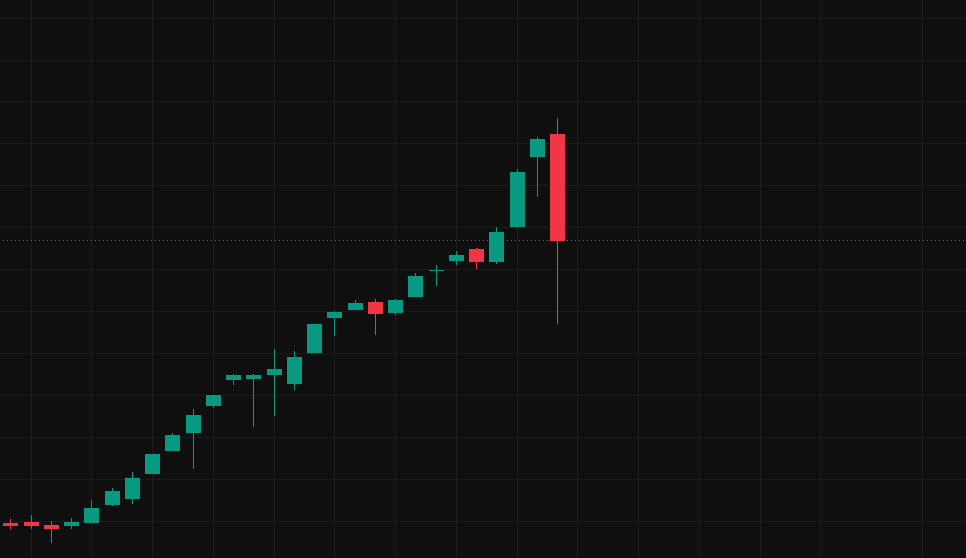
Yet, on July 8, 2026, the stock experienced a jarring wake-up call. Despite hitting a brand new 52-week high of ₹226.00 early in the session, aggressive selling pressure took over, dragging the stock down to settle at ₹196.98, marking a sharp intraday drop of 10.91%.
For retail investors and momentum traders, a double-digit single-day drop in a stock that was aggressively scaling new highs can feel baffling. How does a company with an expanding global pipeline, strong domestic footprint, and upgraded management guidance collapse by more than 10% in a single session?
This detailed analysis deconstructs the market mechanics, technical triggers, block deal realities, and underlying fundamentals that caused today’s sharp correction in Cupid Limited.
The Intraday Trajectory: A Tale of Two Sessions
To understand the severity of today’s price action, we have to look closely at how the trading session evolved hour by hour.
The Morning Surge
When the opening bell rang, it initially looked like Cupid would continue its unstoppable bullish run. The stock opened strong at ₹222.33, up from the previous day’s close. Driven by initial buying momentum from retail participants reacting to the company’s upbeat Q1 FY27 revenue guidance (slated to cross ₹150 crore), the stock rapidly ascended to hit a fresh lifetime high of ₹226.00.
The Mid-Day Reversal
However, the top was short-lived. As the broader market indices—the BSE Sensex and NSE Nifty 50—started displaying intense weakness, sentiment across the small-cap segment curdled. The Sensex cracked severely, opening lower and extending its losses to close down by a whopping 1,349 points (or 2.19%). This macro-level selloff acted as a systemic trigger.
The Capitulation
Once the momentum reversed, stop-losses across major trading desks were triggered. The stock broke through its immediate short-term support levels, leading to cascading liquidations. Massive volume poured in, but unlike previous days where volume indicated strong accumulation, today’s volume of over 8.6 crore shares across the NSE and BSE reflected heavy distribution. The stock eventually hit its intraday low near the closing bell, closing down 10.91% at ₹196.98.
| Trading Metric | Value / Level | Market Significance |
| Open Price | ₹222.33 | Reflected initial optimistic carryover from corporate updates. |
| Intraday High (New 52-W High) | ₹226.00 | Peak momentum point; fast converted into a classic bull trap. |
| Intraday Low | ₹195.00 | Maximum capitulation point during the peak afternoon panic. |
| Closing Price | ₹196.98 | Finished near the bottom of the daily range, a bearish daily candle. |
| Total NSE + BSE Volume | ~86.3 Million Shares | Multi-fold jump over historical averages, indicating heavy distribution. |
| Net Percentage Change | -10.91% | The largest single-day percentage drop for the counter in recent months. |
The Key Triggers Behind the Selloff
No stock drops nearly 11% in a vacuum when its fundamental guidance is positive. Today’s crash was a textbook convergence of a large institutional block deal, severe systemic market pressure, and extreme valuation stretching.
1. The Strategic Block Deal: Institutional Profit Booking
The primary catalyst for the sudden shift in supply-demand dynamics was a massive block deal executed on the exchanges. Reports indicate that an equity stake of approximately 2.3% in Cupid Limited, valued at roughly ₹127.5 crore, changed hands during the session.
When a substantial block deal occurs after a stock has run up 60% in a month, the market usually interprets it in one of two ways. If it is an marquee institutional buyer taking a fresh stake, the stock stabilizes. However, if the market senses that early institutional investors, high-net-worth individuals (HNIs), or promoters are offloading shares to lock in multi-bagger gains, it triggers a ripple effect of panic selling among retail traders. Given the immediate downward spiral following the deal, it is clear that market participants panicked over the localized liquidity surge and rushed for the exit gates.
2. Broad Market Contraction (Systemic Risk)
The Indian equity markets faced one of their toughest sessions of 2026 today. The benchmark BSE Sensex collapsed by 1,349.73 points to close at 76,466.72.
When large-cap indices experience severe intraday drawdowns, institutional asset managers often pull capital out of high-flying, highly liquid small-cap and mid-cap stocks to cover margin requirements or reallocate to safer defensive sectors. Cupid, because of its extreme run-up, was the perfect candidate for institutional cash extraction.
3. Stretched Valuations and the “Price-to-Everything” Reality
Let’s look at the valuations honestly. Even with Cupid’s excellent operational growth, its meteoric rise had pushed its price-to-book (P/B) and price-to-earnings (P/E) ratios to incredibly lofty heights.
Prior to today’s drop, the stock was trading at more than 66 times its book value. In the FMCG and healthcare manufacturing space, a P/B ratio above 60x requires an absolute flawless execution of future guidance with zero room for error. When valuations are this stretched, any minor change in market liquidity or broader macro weakness causes sharp, violent corrections as mean reversion takes hold.
Fundamental Health Check: Is the Growth Story Over?
To determine whether today’s drop is a structural warning sign or a temporary buying opportunity, we must separate daily price volatility from corporate performance. A deep dive into the company’s recent quarterly financials and long-term targets reveals that the business itself remains fundamentally robust.
The Financial Trajectory (Q4 FY26 vs. Prior Quarters)
Cupid’s recently concluded financial year (FY 2025-26) showed spectacular top-line and bottom-line outperformance. In Q4 FY26, the company recorded a total income of ₹132.04 crore, representing a massive 116.1% year-on-year growth compared to the ₹61.11 crore posted in Q4 FY25.
| Financial Parameter | Q4 FY26 (₹ Cr) | Q3 FY26 (₹ Cr) | Q4 FY25 (₹ Cr) | QoQ Growth (%) | YoY Growth (%) |
| Total Income | 132.04 | 104.38 | 61.11 | 26.5% | 116.1% |
| Total Expenses | 84.59 | 61.10 | 45.12 | 38.4% | 87.5% |
| Profit Before Tax (PBT) | 47.45 | 43.27 | 16.00 | 9.7% | 196.6% |
| Profit After Tax (PAT) | 36.26 | 32.83 | 11.51 | 10.4% | 215.0% |
| Reported EPS (₹) | 0.26 | 1.22 | 0.42 | -78.7% | -38.1% |
An Important Nuance on EPS: You might notice that while Net Profit (PAT) grew by 215% YoY, the Reported Earnings Per Share (EPS) dropped from ₹0.42 to ₹0.26. This is not due to a drop in operational profitability, but rather the result of a 4:1 bonus issue executed earlier in 2026. The share base expanded significantly, which structurally diluted the per-share metrics while keeping the underlying equity value intact.
Expenses vs. Operating Leverage
One metric that likely caught the attention of sophisticated analysts today was the rise in expenses. Total expenses for Q4 FY26 stood at ₹84.59 crore, up 38.4% sequentially and 87.5% year-on-year.
This expansion in costs is directly tied to Cupid’s aggressive scaling efforts:
- Capacity Expansion: Investing heavily in expanding its core business.
- B2C Distribution Push: Scaling up its consumer wellness and personal lubricant segments across modern trade, organized retail, and pharmacy networks.
- Strategic Investments: Deploying capital into avenues like Baazar Style Retail (₹82.88 crore investment) to rapidly expand its high-margin domestic B2C reach.
The Strategic Outlook for FY27 and Beyond
If we look past today’s negative price action, the forward-looking guidance provided by the management suggests that the company’s structural growth remains entirely intact. Just hours before the selloff, the company released an official business update confirming improved visibility across both domestic and international markets.
1. Upgraded Revenue Guidance
Encouraged by a spectacular start to the new fiscal year—with Q1 FY27 revenue on track to breach the ₹150 crore mark—management officially raised its full-year FY27 revenue guidance by 10%. The company now confidently expects FY27 revenue to comfortably pass ₹660 crore, a sharp increase from its previous projection of ₹600 crore.
2. International B2B and the PFSCM Partnership
A major pillar of Cupid’s future growth is its long-term supply agreement with the Partnership for Supply Chain Management (PFSCM) based in the Netherlands. This partnership hardwires Cupid into global healthcare procurement networks, ensuring a steady stream of highly predictable, institutional B2B revenue from international buyers and government procurement programs across multiple continents.
Technical Analysis: Navigating the Core Support Levels
From a technical chart perspective, today’s 10.91% drop has created a classic “High Volume, Large Red Body” candle right at the lifetime peak. This indicates an immediate shift in momentum that traders must respect.
  Price Level
     ₹226.00  +--- [52-Week High / Intraday Peak]
              |
              |  █  <-- Heavy Selling Volume / Distribution Candle
              |  █
     ₹196.98  +--- [Current Closing Price]
              |
     ₹185.00  +--- [Immediate Short-Term Support / 20-Day EMA]
              |
     ₹165.00  +--- [Major Structural Support / 50-Day EMA]
Key Technical Observations:
- Moving Average Confluence: Prior to today, Cupid was trading comfortably above its 5-day, 20-day, 50-day, 100-day, and 200-day Exponential Moving Averages (EMAs). While today’s drop has broken the ultra-short-term 5-day momentum line, the stock is still technically positioned in a broader, long-term uptrend.
- The 20-Day EMA Guardrail: The immediate downside support zone rests between ₹182.00 and ₹185.00, which coincides with the 20-day EMA. If the stock manages to find a floor here over the next few sessions, it will point to healthy, routine profit-taking after an extended 60% monthly run-up.
- The Risk of Extended Consolidation: If the stock fails to hold the ₹185 level on a closing basis, the next major structural demand zone lies near the 50-day EMA at ₹165.00. A slide to this level would represent a deeper correction, forcing the stock into a multi-week consolidation phase to cool off its overbought technical indicators (RSI and MACD).
Key Risk Factors to Monitor Closely
While the growth numbers look excellent, any balanced investment perspective requires evaluating the structural risks that could cap Cupid’s upside or cause further volatility.
1. High Valuation Multiples
Trading at over 66 times its book value means that the market has already priced in several years of perfect operational execution. If Cupid faces even a slight delay in its export shipments, a single quarter of soft margins, or an unexpected extension in product commercialization timelines, the stock will face aggressive valuation de-rating.
2. Promoter Pledging Dynamics
According to corporate data, promoter pledging within the company recently saw an uptick, rising from 19.04% to 24.79% in a single quarter. While promoter pledging is a standard tool used to raise capital for corporate expansion, high pledge ratios always introduce localized volatility during market crashes. If the stock drops sharply, lenders can enforce margin calls, leading to involuntary selling pressure.
3. Regulatory and Compliance Oversight
Earlier in the year, Cupid faced a SEBI warning letter linked to a preferential issue cancellation. While the company successfully settled the compliance matters and moved past it, small-cap companies operating in highly regulated medical device segments must maintain absolute corporate governance hygiene. Any future regulatory speedbumps from SEBI or global health bodies (like the USFDA or WHO) can severely impact institutional confidence.
Summary & Strategic Takeaway
Today’s 10.91% drop in Cupid Limited is a clear reminder of how small-cap investing works. It was a classic “liquidity meets profit-taking” event, where a major 2.3% institutional block deal triggered an avalanche of stop-loss selling against the backdrop of a broader 1,349-point crash on the Sensex.
For Short-Term Traders:
The immediate bullish momentum has been disrupted. It is highly advisable to avoid catching a falling knife until the stock stabilizes around its key technical support levels near the 20-day EMA (₹185) or displays clear signs of volume exhaustion.
For Long-Term Investors:
The underlying business fundamentals, operational execution, and forward-looking growth engine look completely unharmed. The company has record trailing revenue growth (+116% YoY), an upgraded FY27 revenue target of ₹660+ crore, a strong order pipeline via the Dutch PFSCM contract, and a highly profitable niche in the global contraceptive market. If you believe in the long-term structural turnaround story of Cupid, this sharp correction is an expected cooling-off period that helps flush out weak hands and realigns the stock for its next leg of growth.
The professional insights, market data, and company analyses provided in this article are for informational and educational purposes only. This content does not constitute financial, investment, legal, or tax advice.
No information or analysis presented here should be interpreted as a specific recommendation, endorsement, or solicitation to buy, sell, or hold any security, stock, financial instrument, or to engage in any particular trading strategy.
Investing in the securities market, particularly in small-cap equities, involves substantial risk. Market conditions are highly dynamic, and asset values can fluctuate rapidly. Past performance is not a reliable indicator or guarantee of future results.
Before making any financial decisions, you should conduct your own rigorous internal research, analyze your risk tolerance, or consult with a SEBI-registered financial advisor (or equivalent certified professional in your jurisdiction). The author and platform accept no liability for any financial loss or damage arising directly or indirectly from the use of this data.